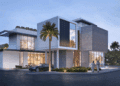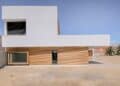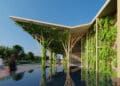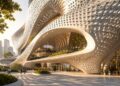
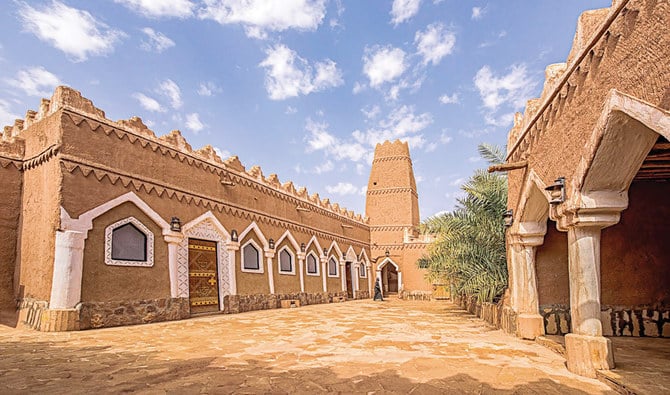
Modern Arabic fusion architecture incorporates authentic Najdi heritage into contemporary Saudi buildings by balancing traditional mud-brick design elements with high-performance, modern construction materials. Architects achieve this blend by utilizing geometric triangular patterns, internal courtyards, and deep-set windows to regulate thermal comfort while maintaining structural relevance. This combination allows public and residential structures to honor historical identity without sacrificing the technical standards required by contemporary urban developments in the Kingdom.
Key Performance & Baseline Data
| Metric / Baseline Element | Value / Target | Primary Data Source | Year |
| Built Environment Power Demand | ~78% of total country electricity consumption | MDPI Energies (Allahaim) | 2025 |
| EUI Reduction via Code Compliance | 5% to 25% savings based on climate zone | MDPI Energies (Allahaim) | 2025 |
| Key Statutory Building Standard | Saudi Building Code (SBC 601) Green Buildings | Frontiers in Built Environment | 2025 |
| National Sustainable Rating Index | Mostadam Green Building Rating System | Frontiers in Built Environment | 2025 |
The evolution of Saudi Arabia’s urban landscape has driven a significant shift toward localized architectural identity. Instead of applying generic glass facades, regional master planning actively looks to historical vernacular forms—specifically Najdi design from the central region—to solve modern structural challenges.
Najdi architecture traditionally relied on sun-dried mud bricks, thick insulating walls, and minimal external openings to mitigate extreme desert heat. Modern fusion projects adapt these core principles by translating old cooling methods into advanced concrete, local limestone, and insulated smart glass systems. By isolating the structural load on modern frames, designers can integrate classic features like the mashrabiya (wooden lattice screening) or geometric triangular incisions (tashreef) on a much larger scale, improving daylight diffusion while maintaining high energy efficiency.
Why are Modern Developers Replacing Traditional Mud Bricks?
While raw mud brick possesses excellent thermal properties, it fails to meet the structural load-bearing requirements, vertical scalability, and moisture-resistance benchmarks mandated for high-density commercial developments under the Saudi Building Code (SBC). Modern materials, such as exterior insulation finish systems (EIFS) combined with a local limestone rain-screen cladding, mimic the high thermal mass of original Najdi structures. This enables developers to create buildings that delay daytime heat transfer into interiors while providing the structural longevity expected of contemporary commercial real estate.
How Do Geometric Triangular Windows Balance Aesthetic Heritage with Energy Code Compliance?
In historical Najdi buildings, tiny triangular cuts along the parapets and upper wall sections allowed cross-ventilation while blocking direct sun glare. In contemporary fusion projects, these geometric motifs are upscaled using advanced computerized numerical control (CNC) stone cutting or decorative aluminum panels placed in front of recessed, low-emissivity (Low-E) double glazing. This layered skin honors traditional spatial symmetry, diffuses harsh natural light to prevent interior glare, and reduces solar heat gain coefficients to meet the requirements of the Mostadam Green Building Rating System.
Frequently Asked Questions
What are the defining elements of traditional Najdi architecture?
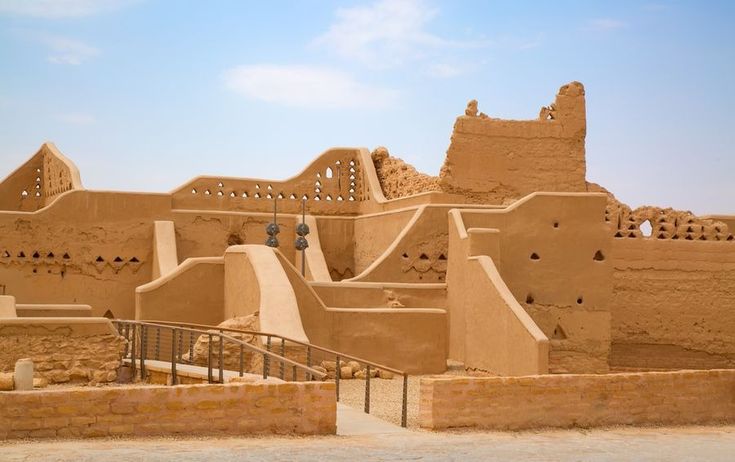
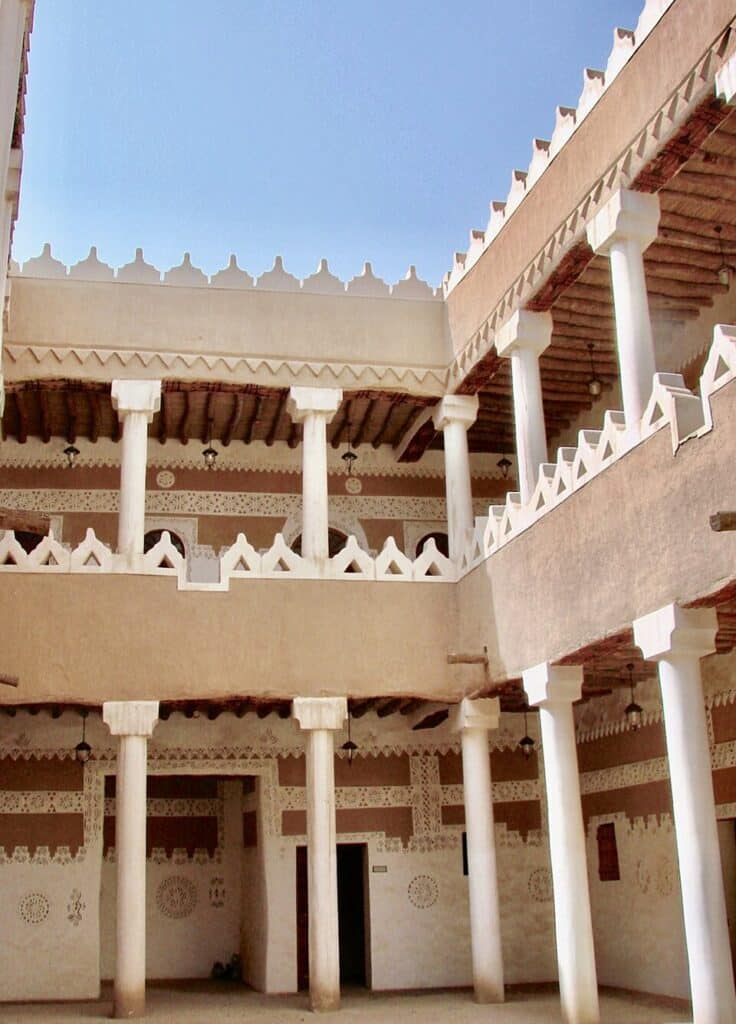
Traditional Najdi architecture evolved over centuries as a direct response to the central Arabian climate: extreme diurnal temperature swings (40–50°C days, 15–25°C nights), rare rainfall, intense solar radiation, and scarce timber. The defining elements are: thick sun-dried mud brick (sarooj) walls of 400–600mm that store daytime heat and release it outward at night; internal unroofed courtyards (hosh) that trap cool night air and provide shaded outdoor space during the day; decorative crenellations (shurufat) along roof parapets that serve as parapet walls shielding rooftop living areas from direct sun and wind; triangular micro-perforations (tashreef) along upper wall sections that allow cross-ventilation while maintaining privacy and blocking direct solar glare; and the complete absence of external windows at ground level on street facades — all openings face the internal courtyard. At-Turaif district in Diriyah, a UNESCO World Heritage Site since 2010, contains the best-preserved examples of authentic Najdi architecture and serves as the primary reference for modern fusion projects.
How do modern materials replicate traditional mud-brick thermal properties?
The thermal performance of traditional sarooj mud brick walls — typically achieving a thermal lag of 8–12 hours and an effective U-value of approximately 1.0 W/m²K for a 400mm wall — is replicated in modern construction through a layered assembly rather than a monolithic material. The standard approach: a structural reinforced concrete frame carries loads, allowing the thermal envelope to be optimised independently. The outer thermal layer combines 80–120mm of mineral wool or polyisocyanurate (PIR) insulation board with a local limestone rain-screen cladding (typically 50–80mm Riyadh or Hejaz limestone), which provides the authentic visual texture and colour of original Najdi walls while the insulation layer achieves thermal resistance (U-value 0.25–0.35 W/m²K) that significantly exceeds the original mud brick. Cellular autoclaved aerated concrete (AAC) blocks are also used as infill walls in some projects for their combination of moderate thermal mass and workability. EIFS with a textured earth-tone silicone render is the most cost-accessible alternative when budget constrains the use of natural stone cladding.
Why are courtyards central to modern Arabic fusion design?
The courtyard (hosh) is the thermal engine of Najdi architecture and its most powerful contribution to modern Arabic fusion design. The mechanism operates in two phases. During daytime, the courtyard’s high surrounding walls cast shadow over most of the floor area during peak sun hours, preventing direct solar radiation from heating the courtyard floor and adjacent interior rooms. This shaded, enclosed air mass remains significantly cooler than the open ambient environment. At night, the courtyard acts as a radiative cooling vessel: its enclosed geometry allows the floor and walls to radiate absorbed heat upward to the clear desert sky (a highly effective natural heat sink), dropping the courtyard air temperature 5–10°C below the surrounding urban ambient temperature by pre-dawn. Interior rooms opening onto the courtyard are naturally cooled by this cooled air mass through controlled ventilation openings. Modern courtyard designs amplify this effect with shallow water features (doubling as reflective surfaces and evaporative coolers), deciduous planting that provides summer shade and winter solar access, and automated night ventilation systems that flush interior rooms with courtyard air during the coolest pre-dawn hours.
Is modern Najdi architecture limited to residential properties?
Najdi heritage principles now explicitly guide Saudi Arabia’s largest built environment projects across all typologies. Diriyah Gate Development Authority’s masterplan — covering 14 square kilometres adjacent to the UNESCO-listed At-Turaif district — applies Najdi architectural guidelines to museums, hotels, retail, offices, and public plazas, with all new structures required to use local limestone cladding, earth-tone plasters, and internal courtyard configurations. The NEOM Sindalah island hospitality structures and the King Salman Park cultural facilities in Riyadh both reference Najdi spatial principles in their massing and material specifications. The Riyadh Metro stations, designed by Zaha Hadid Architects and other international firms, incorporate parametric interpretations of Najdi geometric patterns into their structural facades and interior ceilings. The Architecture and Design Commission (ADC) mandates Najdi character area guidelines for all new construction within Riyadh’s historical urban core — covering residential, commercial, and civic buildings within designated heritage conservation zones. Full guidelines are available at adc.gov.sa.