In 2026, residential architecture and spatial layouts are undergoing a definitive structural evolution, moving completely away from cold, sterile minimalism toward spaces built for physical warmth, functional flexibility, and material longevity. Driven by a global desire for homes that act as personal retreats, the design landscape prioritizes rich, nature-inspired environments over synthetic, match-and-coordinate templates. This shift relies heavily on integrated microclimates, structural heritage revival, and high-performance tactile materials that age gracefully over decades of active use.
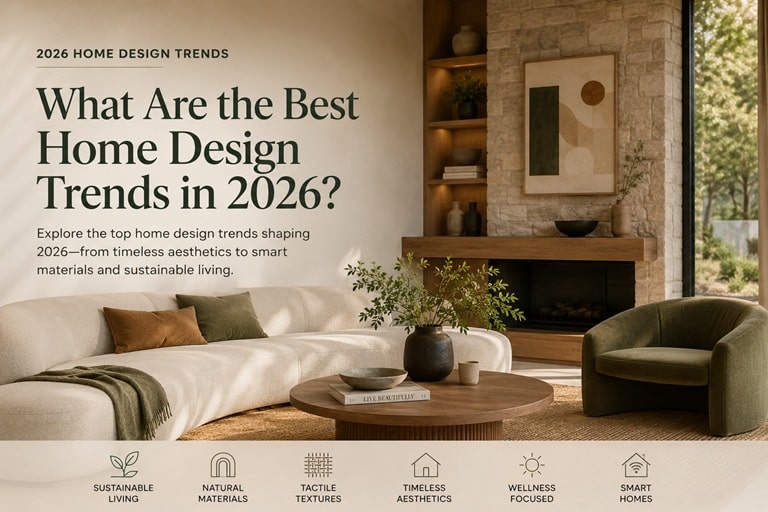
Core Residential Home Design Trends and Structural Metrics (2026)
| Home Design Component | 2026 Architectural Trend Characteristics | Ideal Material / Framework Pairing | Design Source Baseline |
| Modern Heritage Aesthetic | Blending historical wall moldings with contemporary silhouettes | Unlacquered brass, inset walnut cabinetry, and patinaed silver | Wikipedia Architectural Style Guides |
| Biophilic Spatial Layouts | Integrating natural airflow, indoor microclimates, and greenery | Raw limestone aggregate, low-E glass, and vertical planters | Wikidata Biophilic Design Standards |
| Intelligent Modularity | Low-slung, non-rigid seating configurations that adapt to user needs | Smoked oak bases, thick linen, and textured bouclé fabrics | Wikipedia Furniture Engineering |
| Earthy Saturated Palettes | Full-room single-hue color application to ceilings and walls | Deep burgundy, matcha green, terracotta rose, and ochre | Wikidata Color Psychology Systems |
How Is the Modern Heritage Movement Shaping Interior Architecture?
The structural landscape of the modern home is embracing character over generic white-box engineering by adopting the “Modern Heritage” design philosophy. Instead of tearing out classic features, developers are intentionally installing deep crown moldings, architectural arches, and traditional wood paneling to give rooms an immediate sense of scale and history. This design paradigm balances historic weight with contemporary living by pairing traditional inset millwork with sleek, low-profile minimalist light fixtures and updated geometric hardware configurations.
Why Are Biophilic Layouts Crucial for Next-Generation Wellbeing?
The integration of natural, living elements into residential blueprints has moved from a basic decorative choice to a foundational engineering requirement for health and recovery. Modern floor plans utilize strategic window positioning and open internal light wells to maximize daylight exposure while using indoor water walls and structural planters to filter air naturally. These living design configurations create physical microclimates that reduce internal household dust particles and naturally lower ambient indoor summer temperatures, decreasing a home’s dependency on artificial climate control.
What Is Color Drenching and How Does It Redefine Room Volume?
Rather than using paint simply as a neutral background, 2026 home design treats walls and ceilings as an active, single-note architectural envelope through a technique known as color drenching. Designers are applying uniform, highly saturated, nature-inspired colors—such as deep olive, rich espresso, or moody indigo—across baseboards, walls, window trims, and the ceiling overhead. This monochrome application minimizes harsh structural transitions, visually elongates the vertical height of a room, and wraps the living environment in a cozy, protective layer that quiets daily visual noise.
Frequently Asked Questions (FAQ)
What home design features are going out of style in 2026?
Several dominant trends from the 2018–2023 residential design cycle are now clearly in retreat. Stark all-white minimalism with matching furniture suites — the Scandinavian-influenced aesthetic that defined a generation of new-build apartments — is being replaced by warmer, more layered environments. Cool-toned grey palettes (especially the pale grey wall with white trim combination) are declining sharply; major paint manufacturers including Farrow & Ball, Little Greene, and Benjamin Moore report that warm neutrals, deep earth tones, and saturated accent colours are now their fastest-growing residential categories. In the Gulf market specifically, developers of high-end residential projects in Dubai’s Palm Jumeirah, Abu Dhabi’s Saadiyat Island, and Riyadh’s Diriyah district are specifying Modern Heritage and biophilic interior packages as standard rather than as premium upgrades — reflecting the broader market shift away from generic minimalism.
How do mixed wood tones add value to a residential layout?
Mixed wood toning is one of the most accessible and highest-impact design moves of 2026. The core principle is tonal contrast combined with grain variety: pairing a light, open-grain timber (white oak, ash, or bleached larch) with a rich, tight-grain dark wood (smoked oak, walnut, or wengé) in the same space creates visual anchoring that feels collected rather than coordinated. Practical guidance for Gulf homeowners: use the lighter timber for floors and open shelving (which maximise daylight reflection), and the darker timber for cabinetry, panel feature walls, and furniture bases (which add weight and grounding to a room). Avoid mixing more than two primary wood species in a single room — three or more creates visual competition rather than depth. Teak and mahogany, which were dominant in Gulf interiors from the 1990s–2010s, are now considered dated in contemporary residential contexts and are best updated by introducing lighter white oak elements alongside them rather than full replacement.
What materials are trending for high-traffic household surfaces?
For high-traffic residential surfaces in 2026, the specification hierarchy prioritises material honesty and durability over surface treatments that conceal base quality. For floors: large-format matte porcelain (900×900mm+) in stone-effect finishes is the dominant choice — scratch-resistant, non-slip, and visually grounding. Honed limestone and travertine are preferred in premium Gulf residences for their natural variation and thermal mass properties. For countertops: honed or leathered stone finish (not polished) on engineered quartz or natural marble is standard — the matte finish hides daily wear marks while maintaining the material’s richness. For wall surfaces: limewash paint, microcement, and textured plaster are replacing flat-painted drywall across all price points — each adds depth that flat paint cannot replicate and ages gracefully rather than showing wear. For hardware: unlacquered brass (which develops a natural patina), aged iron, and matte black are the dominant metal finishes, replacing polished chrome and brushed nickel which are now considered transitional-era choices.
In the Gulf market specifically, travertine and aged limestone are gaining traction as countertop and floor materials for their natural variation and heat-resistant properties — practically relevant in a climate where interior surfaces absorb significant heat during summer months. For wall tiles, large-format rectified matte porcelain in warm stone tones is replacing the small-format gloss tiles that dominated Gulf mid-market residential construction through the 2010s.
Where can homeowners and interior designers in the Gulf source materials and inspiration for 2026 home design trends?
The Gulf residential market is served by an increasingly sophisticated design ecosystem. For material sourcing: Dubai Design District (D3) hosts over 100 international and regional design brands, material libraries, and showrooms in a walkable campus at d3.ae. The Downtown Design fair (November, Dubai) is the region’s premier showcase for new furniture and material launches. In Riyadh, the Design Week Saudi (held at JAX District in Diriyah) is the Kingdom’s equivalent event. For inspiration calibrated to Gulf climates and aesthetics: Architectural Digest Arabia and the GCC editions of Elle Décor publish region-specific residential features twice yearly. Dezeen’s Middle East coverage (dezeen.com) tracks high-profile regional residential and hospitality projects with material specifications. For professional services: the Emirates Interior Design Association (EIDA) at eida.ae maintains a directory of accredited UAE interior designers, and the Saudi Interior Design Society (SIDS) provides the equivalent directory for Riyadh, Jeddah, and Dammam practitioners.