
In 2026, architectural design in arid regions has moved beyond passive barriers. The emergence of Sand-Abrasive Resistant Geometry marks a transition where a building’s physical form is treated as an aerodynamic instrument. Rather than fighting the desert environment, architects are designing structures that allow wind and sand to pass around them with minimal friction, drastically reducing maintenance costs and long-term structural erosion.
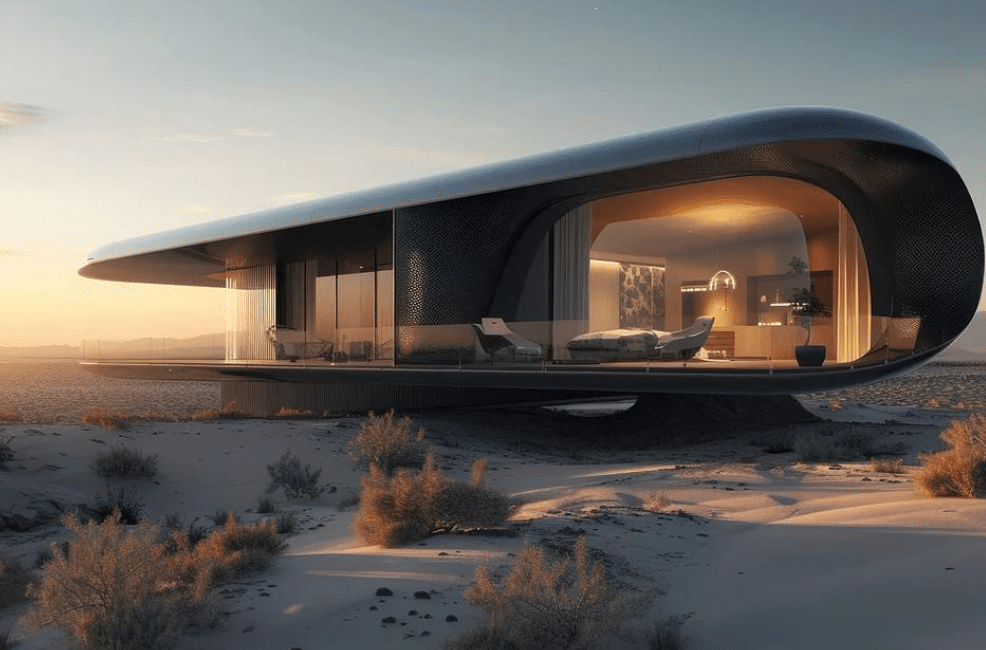
The Core Strategies of Aerodynamic Design
Modern sand mitigation is achieved through two primary design layers: the overall volume of the building and its micro-textural skin.
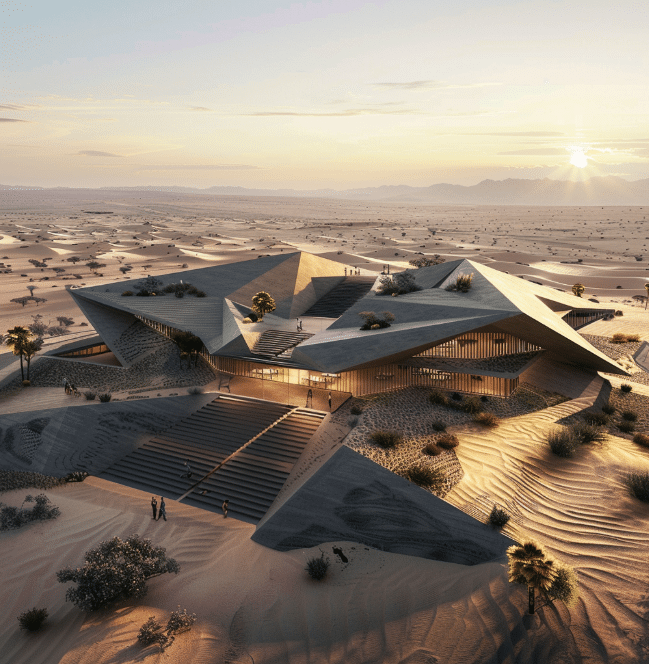
Aerodynamic Form Configuration
The primary goal in 2026 is shape optimization to mitigate the deceleration effect of buildings on sand-carrying winds.
- Softened Topologies: High-rise structures are moving away from sharp, 90-degree corners, which create turbulent “wake zones” where sand settles. Instead, architects are utilizing rounded, tapered, and “bundled-tube” configurations.
- The Slipstream Effect: By smoothing the building’s silhouette, designers ensure that wind maintains its velocity. When wind speed stays high, sand remains in an airborne state and passes the building rather than dropping and accumulating at its base.
Self-Cleaning Envelopes and “Dimpled” Skins
Surface texture is as critical as the overall volume. 2026 has seen the widespread adoption of wind-adaptive envelopes that respond to real-time pressure changes.
- Surface Suction Reduction: Advanced analysis now allows for “dimpled” or micro-textured building skins. Similar to the surface of a golf ball, these textures reduce leeward-side turbulence and wind suction by nearly 30%, preventing the vacuum effect that pulls fine dust into ventilation intakes.
- Abrasive Mitigation: By controlling the boundary layer of air around the building, these geometries reduce the physical impact of sand grains against the facade, preserving the integrity of high-end finishes and glass coatings over a 50-year lifecycle.
The Economic Logic: Life-Cycle Performance
The adoption of sand-resistant geometry is driven by rigorous Life-Cycle Cost Analysis (LCCA). In the 2026 fiscal landscape, structural resilience is measured by how effectively a building manages its own maintenance.
- Operational Savings: Buildings designed with “sand-transport” geometries—such as semi-filled or excavated profiles—can reduce sand-removal expenditures by up to 40% over the asset’s life.
- Infrastructure Resilience: This geometry is no longer limited to skyscrapers; it is now the standard for desert highways and rail embankments. The slope of the roadbed is mathematically tuned to the prevailing wind direction to ensure the road remains “self-sweeping.”
- Longevity of Materials: By minimizing the “sandblasting” effect of high-velocity desert winds, developers can use more diverse materials on the facade without risking premature dulling or structural pitting.
2026 Design Implementation Checklist
For professionals moving into the schematic design phase, these four steps are now standard practice:
- Vortex Identification: Utilize computational fluid dynamics (CFD) to identify “vortex shedding” zones where sand is likely to accumulate.
- Geometric Smoothing: Replace sharp-edged podiums with tapered or rounded geometries to maintain wind velocity at the ground level.
- Micro-Texturing: Implement dimpled facade panels in areas of high sand-abrasion risk to stabilize the boundary layer of air.
Wind Alignment: Align building orientation with the prevailing seasonal winds (such as the “Shamal”) to create a natural, long-term slipstream.