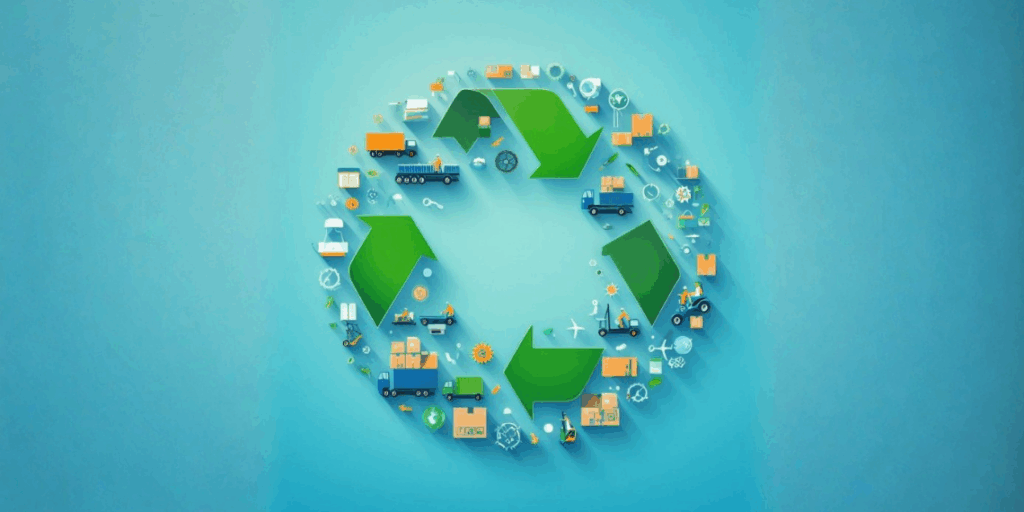
For decades, the “forward” supply chain received all the investment. Today, the focus has shifted. With e-commerce return rates hovering around 20-30%, businesses are realizing that the faster an item moves through the “reverse” loop, the more value is preserved.
In 2026, the leading strategy is Circular Logistics, where products are no longer “discarded” but redirected to their next best use through a sophisticated hierarchy of recovery.
1. AI-Driven Grading and Inspection
The greatest bottleneck in reverse logistics has always been the manual labor required to inspect returns.
- Automated Decisioning: AI systems now use high-speed cameras and sensors to grade returned electronics and apparel in seconds.
- Predictive Routing: Instead of sending all returns to a central warehouse, AI determines the most profitable destination—be it a nearby retail store for immediate resale, a refurbishment center, or a secondary market liquidator—minimizing transportation costs and carbon footprint.
2. The Boom of Secondary Markets (Re-commerce)
The stigma of “refurbished” is gone. In 2026, brands are partnering with major logistics providers to create official “Renewed” storefronts.
- Value Recovery: Companies are recovering up to 60-70% of the original retail price on refurbished goods, compared to just 10-15% through traditional bulk liquidation.
- Consumer Demand: Gen Z and Millennial buyers are actively seeking out “certified pre-owned” items for both environmental and economic reasons.
3. Regulatory Pressure: The “Right to Repair” Catalyst
New 2026 regulations, such as Extended Producer Responsibility (EPR) and Right to Repair laws, have made reverse logistics a legal mandate.
- Legally Required Loops: Manufacturers are now responsible for the end-of-life disposal of their products.
- Harvesting Components: Leading tech companies are treating their own old products as “urban mines,” extracting rare earth minerals and microchips from returned units to use in new manufacturing, reducing reliance on volatile global raw material markets.
4. “Green” Returns: The Sustainability Competitive Edge
Consumers now scrutinize the environmental impact of their returns. “Box-less” and “Label-less” return drop-offs at consolidated hubs are reducing the carbon intensity of the last-mile reverse loop.
- Consolidation: By grouping returns, companies reduce the number of half-empty trucks on the road, cutting fuel costs by an estimated 25%.
Actionable Checklist for 2026 Logistics Planning
- [ ] Audit Your Recovery Rate: Calculate exactly how much value is recovered from each return category.
- [ ] Deploy Automated Grading: Invest in AI inspection tools to reduce manual sorting time.
- [ ] Explore Re-commerce Channels: Establish a “certified refurbished” outlet to capture secondary market value.
[ ] Consolidate Return Points: Partner with third-party pick-up points to lower logistics costs.