This feature appears in the July edition of Business Today Middle East.
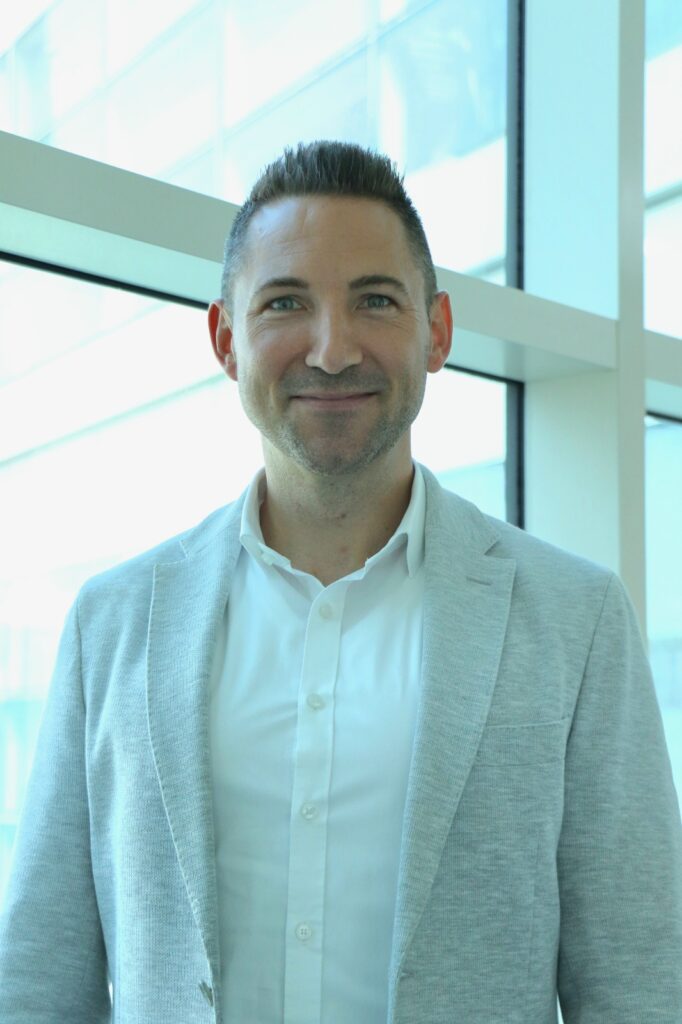
According to Simon Ulmann, Vice President Operations & Supply Chain, IMEA, at Henkel Adhesive Technologies, the future belongs to organisations that combine digital innovation with operational resilience, sustainability and a skilled workforce.
There is a great deal of excitement around AI, but where do you believe AI is creating the most tangible value in manufacturing and supply chains today, and where is the industry still overestimating its impact?
AI is undoubtedly transformative, but it is important to separate reality from hype. Today, the most tangible value it delivers in manufacturing and supply chains lies in predictive capabilities, safety and complexity management.
We are seeing measurable returns in demand forecasting, where machine learning algorithms analyse historical data, market trends and external variables to predict demand fluctuations with a level of accuracy that traditional models struggle to achieve. On the factory floor, AI-powered vision systems are enhancing workplace safety, while predictive maintenance is helping to prevent costly downtime by identifying equipment issues before they escalate into failures.
Where the industry tends to overestimate AI is in the notion of fully autonomous decision-making. The idea of a completely self-managing, end-to-end supply chain remains some distance from reality. AI is exceptionally good at processing vast datasets and recommending actions, but it cannot replicate human judgement, empathy or the ability to navigate complex supplier relationships during periods of disruption.
I often describe AI as a powerful co-pilot rather than an autopilot. Our focus is on augmented intelligence – equipping supply chain professionals with better insights so they can make faster, smarter and more informed decisions.
If we walked into a Henkel manufacturing facility in 2035, what would look fundamentally different compared to today in terms of automation, workforce roles, and decision-making?
The most striking difference would be the seamless connectivity across the entire manufacturing ecosystem and the natural collaboration between advanced robotics and human talent. Our vision for 2035 is centred on operations that are inherently safe, agile, efficient and sustainable. We see our facilities becoming industry-defining blueprints, combining advanced automation with high-value human expertise and leveraging scalable technologies that can be adopted across the wider manufacturing sector.
In this environment, technology becomes a key driver of operational resilience. Planning and execution will be supported by integrated, real-time data, enabling facilities to respond rapidly to changing market conditions while maintaining a strong commitment to sustainability. The future factory will not simply be more automated; it will be more intelligent, connected and adaptable.
How do you balance resilience with efficiency when both can sometimes pull organisations in different directions?
This is arguably the defining supply chain challenge of our time. For decades, efficiency was the dominant objective. Just-in-Time models were designed to eliminate waste and maximise productivity. More recently, global disruptions prompted a sharp shift towards Just-in-Case strategies, leading organisations to build significant inventory buffers and tie up working capital. Neither extreme offers a sustainable long-term solution.
The answer lies in what we call “smart resilience”. It is not about holding more inventory everywhere; it is about positioning the right inventory in the right locations based on a clear understanding of risk exposure. At Henkel, we use digital twin technology to model our supply chain network and simulate disruption scenarios in seconds. This allows us to identify the most cost-effective mitigation strategies before risks materialise. We also balance resilience and efficiency through greater visibility and regionalisation. By operating on an “in the region, for the region” approach wherever possible, we reduce lead times, minimise exposure to global shipping disruptions and lower transportation costs.
Ultimately, resilience is rooted in agility. Organisations with real-time visibility across their supplier networks can operate leaner because they have the ability to respond before disruptions reach their operations. Efficiency pays the bills, but resilience keeps the business moving. The two must work hand in hand.
What distinguishes companies that successfully transform from those that merely digitise existing processes?
The distinction is critical. Digitisation often means taking an existing process and moving it onto a screen. If a manual approval workflow is transferred from a paper form to a digital platform, the process may be faster, but the underlying inefficiency remains unchanged.
True transformation requires organisations to challenge the operating model itself. It begins by asking, “Why do we do it this way?” rather than “How can we digitise this?.”Transformational organisations use technology to eliminate unnecessary steps altogether. For example, IoT-enabled systems can automatically trigger replenishment orders without the need for manual intervention, fundamentally redesigning the process rather than simply digitising it.
The greatest differentiator, however, is culture. Organisations can invest in the most advanced technologies available, but if employees do not trust the data or feel empowered to act on it, those investments will fail to deliver their full value. The most successful transformations invest as heavily in change management, upskilling and organisational culture as they do in technology itself.
Transformation is ultimately a human endeavour enabled by digital tools.
Do you see sustainability becoming a genuine source of competitive advantage in manufacturing and supply chains, or is it increasingly becoming a baseline expectation for doing business?
At present, it is both, although the direction of travel is clear: sustainability is rapidly becoming a baseline expectation. Regulators, customers and business partners increasingly expect organisations to demonstrate measurable progress on sustainability. In the near future, companies that cannot provide transparency around carbon footprints, ethical sourcing and environmental performance may simply find themselves excluded from procurement processes. Sustainability is becoming a licence to operate.
At the same time, the way organisations pursue sustainability can create significant competitive advantages. Sustainability and operational efficiency are often closely aligned. Investments in energy-efficient manufacturing, renewable energy and water recycling not only reduce emissions but also lower long-term operating costs and provide greater protection against energy market volatility.
Within adhesive technologies, sustainability also creates opportunities for innovation. By developing solutions that support circularity and help customers achieve their own ESG objectives, sustainability moves beyond compliance and becomes a driver of commercial growth and customer value.
What are the biggest investments Henkel is making today to ensure its operations and supply chain remain competitive over the next decade?
As Henkel approaches its 150th anniversary, we recognise that long-term success depends on a continued commitment to future-focused investment. Our priorities are centred around three pillars: digital infrastructure, sustainable operations and people.
The first is strengthening our digital backbone. This includes scaling Industry 4.0 applications, expanding our use of AI-driven analytics and standardising data architecture across our global operations. Agility is impossible when critical data remains fragmented across different systems.
The second pillar is sustainability. We are investing significantly in renewable electricity, advanced water and waste reduction technologies and site upgrades that support our journey towards carbon neutrality.
We are already seeing the results of these efforts. Our flagship sites in Kurkumbh, India, and Gebkim, Türkiye, have achieved carbon-neutral production through the adoption of high-efficiency electric systems and a transition to 100 per cent renewable electricity, eliminating direct fossil fuel use and reducing Scope 1 and Scope 2 emissions to zero.
Most importantly, we continue to invest in people. The factory of the future demands new capabilities, and we are equipping our operators, engineers and supply chain professionals with the skills needed to thrive in an increasingly automated and data-driven environment. Technology evolves rapidly, but an adaptable workforce remains the most valuable long-term investment.
Across India, the Middle East and Africa, where do you see the most significant opportunities for industrial growth and supply chain innovation in the coming years?
The IMEA region is one of Henkel’s most dynamic growth engines, although the opportunities differ significantly across markets.
In the Middle East, rapid industrial localisation and investment in world-class infrastructure are creating compelling opportunities. Programmes such as Saudi Arabia’s Vision 2030 and the UAE’s Operation 300bn are accelerating the transition towards advanced manufacturing and highly digitised logistics ecosystems.
India offers opportunities on an extraordinary scale. The country’s manufacturing ambitions, combined with its strong digital capabilities and deep technology talent pool, make it an ideal environment for advanced analytics, AI-driven supply chain platforms and next-generation operational innovation.
In Africa, growth is being driven by a rapidly expanding and increasingly urbanised consumer base. The challenge lies in overcoming infrastructure constraints and improving distribution networks, creating significant opportunities for decentralised supply chains, mobile-first technologies and last-mile innovation.
Across all three regions, the common thread is clear: immense potential for transformative growth, innovation and long-term industrial development.