

The 25th edition of Airport Show 2026, scheduled to take place at the Dubai World Trade Centre from 12 to 14 October, will highlight the latest biometric technologies and advanced innovations aimed at enhancing passenger experience, security and operational efficiency.
The event is expected to host more than 150 exhibitors from over 30 countries, alongside 120 hosted buyers, and attract over 7,000 visitors from more than 30 nations over its three-day run.

Held under the patronage of H.H. Sheikh Ahmed bin Saeed Al Maktoum, President of the Dubai Civil Aviation Authority (DCAA), Chairman of Dubai Airports, and Chairman and Chief Executive of Emirates Airline and Group, the exhibition will serve as a key global aviation platform.
The event will feature several accompanying conferences, including the Global Airport Leaders’ Forum (GALF), Airport Security Middle East, Air Traffic Control (ATC) Forum, and the Women in Aviation (WIA) Middle East Conference.
Airport Show serves as a major industry meeting point, bringing together stakeholders to explore emerging technologies that are transforming airport operations and reshaping the passenger journey across the Middle East, Africa and South Asia.
Through its Hosted Buyers Programme, the exhibition facilitates direct engagement between airport decision-makers and technology providers, enabling discussions on major procurement and modernization projects as airports continue investing in infrastructure upgrades to become global aviation hubs.
The Middle East, home to some of the world’s busiest international travel hubs, is expected to see passenger traffic reach 240 million by 2026, driving increased adoption of biometric systems to enable faster and more seamless travel experiences.
Airports across the region are benefiting from rising long-haul travel demand, expanding hub capacity, and significant investment in infrastructure modernization.
According to the International Air Transport Association (IATA), replacing manual identity checks with biometric verification can reduce processing times by up to 40%, significantly improving efficiency at high-traffic airports and enhancing passenger flow management.
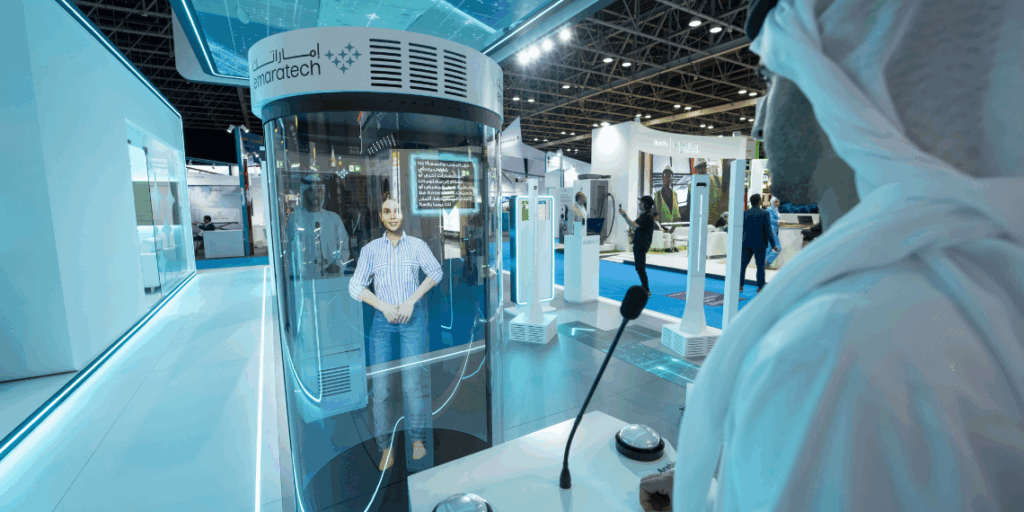
Dubai International Airport, the world’s busiest airport for international passengers since 2014, has already deployed an AI-powered “Red Carpet” smart tunnel capable of processing more than 10 passengers simultaneously.
The UAE aviation sector continues to expand, with progress advancing on the first phase of the Al Maktoum International Airport development project, which is expected to begin operations in 2032.
The multi-billion-dollar project has achieved key milestones in runway construction and early terminal infrastructure development.
According to Majed Al Joker, Chief Operating Officer of Dubai Airports, ongoing investments in biometric and digital technologies are improving operational efficiency and enhancing the passenger experience while accommodating continued growth in travel demand.
He added that the airport network remains focused on driving efficiency through technology adoption, collaboration and operational excellence.
Al Maktoum International Airport is expected to play a central role in Dubai’s future aviation growth, featuring an AI-enabled, fully connected ecosystem designed around passenger-centric services and advanced analytics for optimized flow management.
In Abu Dhabi, Zayed International Airport has already implemented facial recognition-based biometric systems across multiple points in the passenger journey.
Across the region, biometric data is increasingly integrated into airport and border control systems to streamline passenger processing.
Emirates Airline, the world’s largest international carrier, was among the early adopters of biometric systems, introducing facial recognition technology at Dubai International Airport in 2017. The system now enables registered passengers to complete check-in, immigration, lounge access and boarding through automated facial verification.
Etihad Airways is currently testing AI-powered facial recognition for boarding and lounge access, while flydubai is integrating biometric capabilities into self-service kiosks and check-in systems, reflecting a broader regional shift toward unified digital identity solutions.
May Ismail, Event Manager at RX Middle East, said biometric technologies are transforming airport operations by improving both security and passenger convenience while enabling airports to manage growing traffic more efficiently.
She added that airports across the Middle East are increasingly viewing biometrics as an opportunity to enhance competitiveness, improve connectivity and deliver a seamless, touchless travel experience.
Industry estimates suggest the global biometric technology market could reach $150.58 billion by 2030, while the airport biometrics segment may grow to $276.56 billion by 2032.
According to SITA, more than 43% of airports worldwide already use biometric-enabled boarding systems, with adoption expected to rise significantly in the coming years as integrated identity management becomes standard across airport operations.
By 2027, it is projected that most major airports will deploy biometric systems across multiple touchpoints, including check-in, baggage handling, boarding and border control.