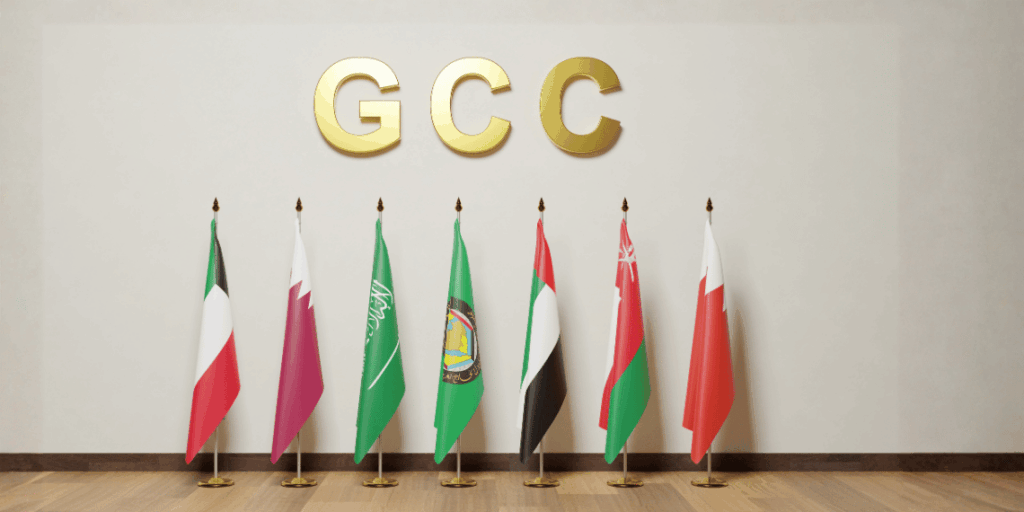
The Gulf Cooperation Council (GCC) nations achieved a combined average score of 66.9 points in the 2026 Economic Freedom Index, comfortably outpacing the international global average of 59.9 points. According to official data, this regional performance indicates a significantly higher level of trade openness, regulatory efficiency, and investor confidence compared to global rates. The sustained upward trajectory reflects years of coordinated legislative overhauls and business-friendly policies executed across all member states.
2026 Economic Freedom Index Benchmarking Data
| Evaluation Region | 2026 Index Average Score (0–100) | Core Performance Margin vs. Global Base | Data Source Agency | Reporting Year |
| Gulf Cooperation Council (GCC) | 66.9 Points | +7.0 Points | GCC Statistical Centre Official Bulletin | 2026 |
| Global International Average | 59.9 Points | Baseline | GCC Statistical Centre Data Synthesis | 2026 |
Which Core Regulatory Pillars Accelerated the GCC’s Global Index Rank?
The structural evaluation managed by the GCC Statistical Centre rates countries across four main macroeconomic pillars: Rule of Law, Government Size, Regulatory Efficiency, and Market Openness. The 2026 data shows that all six member states witnessed uniform improvement or stabilization in their index values between 2025 and 2026. This stability points directly to the successful elimination of cross-border trade friction, minimized bureaucratic red tape, and robust financial market integration that protects foreign capital.
How Does Rising Economic Freedom Stimulate Regional Inward Investment?
Securing the top seven spots on the wider Arab economic map directly shifts how global asset managers evaluate regional risk profiles. By providing verified transparency, the Gulf Cooperation Council states utilize high index scores to capture rising waves of Foreign Direct Investment (FDI). These policy upgrades help generate high-skilled private-sector job opportunities, enhance local entity competitiveness, and reduce transaction corruption, creating long-term fiscal stability outside traditional oil revenues.
Frequently Asked Questions (FAQ)
What was the exact score achieved by the GCC in the 2026 Economic Freedom Index?
According to the 2026 Economic Freedom Index compiled by the Heritage Foundation and cross-referenced with GCC Statistical Centre data, the six GCC member states — Saudi Arabia, UAE, Qatar, Kuwait, Bahrain, and Oman — achieved a combined average score of 66.9 points out of 100, outperforming the global international average of 59.9 points by exactly seven points. The UAE led the GCC with a score of 76.5, ranking among the top 10 globally. Bahrain followed at 72.3, with Saudi Arabia registering its highest-ever score of 68.1 — reflecting Vision 2030 commercial law reforms, the Commercial Companies Law amendment, and the expanded CEPA trade network. All six member states improved or held stable versus their 2025 scores, making this the first year in which no GCC member recorded a year-on-year decline.
What are the main pillars used to calculate the Economic Freedom Index?
The Heritage Foundation’s Economic Freedom Index scores each country across twelve sub-indicators grouped into four main structural pillars: Rule of Law (property rights, judicial effectiveness, government integrity); Government Size (tax burden, fiscal health); Regulatory Efficiency (business freedom, labour freedom, monetary freedom); and Market Openness (trade freedom, investment freedom, financial freedom). The GCC’s strongest pillar in 2026 was Market Openness, where zero or low tariff regimes and 100% foreign ownership provisions produced scores consistently above 75. The weakest pillar region-wide remains Labour Freedom, where employment protection regulations continue to moderate scores despite ongoing reforms in Saudi Arabia and the UAE.
Which specific agency issued these new 2026 regional economic metrics?
The primary regional data and comparative analysis were compiled by the GCC Statistical Centre (gcc-sg.org), the official statistical coordination body for all six GCC member states. The GCC-SC synthesises national accounts data from each member’s statistics authority — including GASTAT (Saudi Arabia), FCSC (UAE), and PSA (Qatar) — into harmonised regional indicators. The Economic Freedom Index itself is produced annually by the Heritage Foundation (heritage.org/index), with the GCC-SC providing regional validation. Investors tracking GCC regulatory changes can monitor monthly statistical bulletins at gcc-sg.org and member-state ministry portals for real-time policy updates.
How does a higher Economic Freedom score directly benefit businesses operating in the GCC?
A higher Economic Freedom score functions as a sovereign risk-pricing signal for multinational corporations and institutional investors. Practically, it translates into lower political risk insurance premiums on long-term contracts, faster regulatory approval timelines — the GCC average for business registration is now under 48 hours — and greater ease of profit repatriation without capital controls. For supply chain managers, high Market Openness sub-scores confirm that import tariffs and customs procedures are streamlined, reducing landed cost uncertainty for goods moving through GCC free zones. For HR and talent strategy, high Regulatory Efficiency scores signal labour market flexibility that factors into multinational decisions on regional headquarters location.