For decades, the answer to “can a foreigner own property in Saudi Arabia?” was effectively no. As of 21 January 2026, the answer is qualified, structured, and — for the first time — yes.
Saudi Arabia‘s Foreign Real Estate Ownership Law took effect on 21 January 2026, permitting non-Saudi nationals to own real estate in the Kingdom for the first time in the country’s modern regulatory history.
The legislation marks the most consequential real estate reform in the Kingdom’s history and aligns directly with Vision 2030’s foreign direct investment targets — specifically the goal of attracting $100 billion in annual FDI by 2030.
What the Law Actually Permits
Non-Saudi individuals residing in the Kingdom may own one residential property anywhere in Saudi Arabia, with the exception of Makkah and Madinah, where ownership remains restricted to Muslims. For non-residents — foreign nationals living abroad who wish to invest in Saudi real estate — ownership is permitted only within designated zones approved by the Council of Ministers, based on recommendations from the Real Estate General Authority (REGA) and the Council of Economic and Development Affairs.
These designated zones are expected to be concentrated in Riyadh, Jeddah, and areas linked to Vision 2030 mega-projects — including NEOM’s accessible zones, the Red Sea Project, and AMAALA. The specific zone boundaries are being promulgated by REGA in phases, meaning that the full geography of investable locations will clarify progressively through 2026.
A transaction fee of up to 5% of property value applies to all foreign purchases. All non-Saudi individuals and entities must register their ownership with the Real Estate Registry; legal title passes only upon registration. The legislation also provides a pathway for listed companies, investment funds, and special-purpose entities — regardless of foreign ownership — to hold property across the Kingdom, including in Makkah and Madinah, subject to Capital Market Authority controls.
Why Now, and What It Means for Market Size
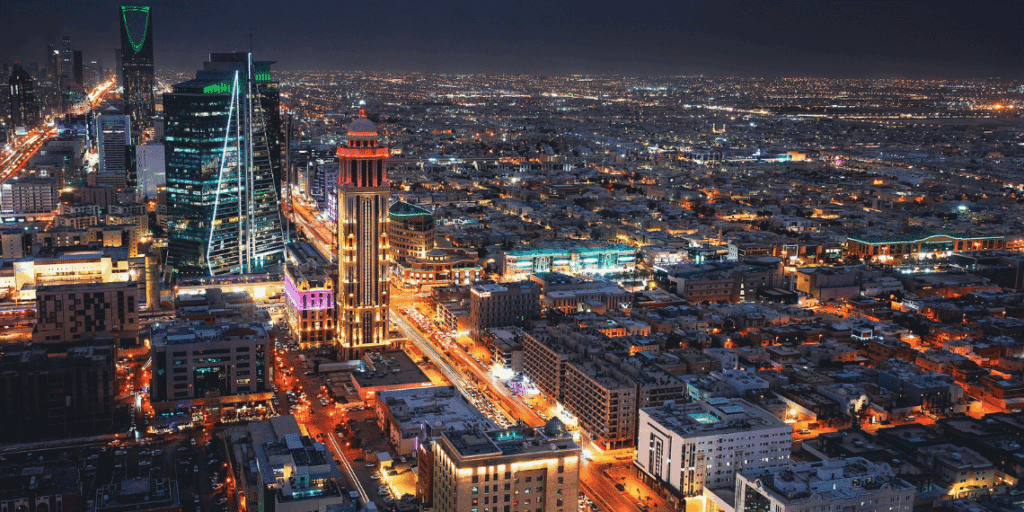
Saudi Arabia’s residential property market was estimated at approximately $69 billion annually before the foreign ownership law’s passage. The Riyadh market in particular has experienced near-doubling of average property prices over the past five years, driven entirely by domestic demand from a young, urbanising population and government housing programmes. Foreign capital has been entirely absent from that appreciation — until now.
Riyadh’s government has imposed a five-year rent freeze in the capital — a measure that signals awareness of affordability pressure even as it simultaneously opens the ownership market to international buyers. That combination — constrained rental supply, new ownership access — could generate significant transaction activity in the designated zones if global investors respond to the law with the urgency that some property consultants are projecting.
Three critical limitations will shape market dynamics. First, the one-residential-unit cap for non-resident non-Saudis rules out portfolio investment at scale by individuals; institutional vehicles through listed companies or investment funds are the mechanism for meaningful foreign capital deployment. Second, the Makkah and Madinah restriction has genuine symbolic and commercial significance — two of Saudi Arabia’s most active property markets remain closed to non-Muslim investors. Third, REGA’s phased designation of approved zones introduces regulatory uncertainty that will slow some investors until zone maps are finalised and confirmed.
Saudi Arabia’s opening is the first realistic opportunity for UAE-based real estate investors — already accustomed to cross-border property exposure — to access the Kingdom’s residential market directly. For developers, the law creates an addressable international buyer market that can now be legally marketed to via UAE and international platforms. Emaar, DAMAC, and Aldar, all of which have Dubai-based sales infrastructure, are positioned to distribute Saudi project inventory to their existing international buyer networks.
The 2026 horizon is an education-and-awareness period; meaningful transaction volumes from international buyers will more likely appear in 2027 once the zone designations are confirmed, the transaction fee structure is normalised, and professional advisory infrastructure is in place.