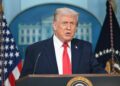
Markets opened the week on a stronger note after U.S. President Donald Trump said a new peace agreement with Iran would restore energy flows through one of the world’s most important oil routes.
Global markets started Monday with renewed optimism after U.S. President Donald J. Trump announced that the United States and Iran had reached a framework agreement aimed at ending hostilities and reopening the Strait of Hormuz.
In a post on Truth Social, Trump described the agreement as a “Great Deal” that would bring “peace and security” to the region. He said the Strait of Hormuz would reopen upon the signing of the deal this coming Friday, allowing mine-removal operations to begin and enabling oil to flow again through the critical waterway.
The announcement comes after weeks of disruption in the Gulf, where tensions around the Strait of Hormuz had raised concerns over global energy supplies. The Strait is one of the world’s most important oil shipping routes, and any prolonged closure can quickly affect crude prices, shipping insurance, inflation, and investor sentiment.
Oil prices moved lower on Monday following the news, while Asian markets rallied as investors welcomed the prospect of reduced geopolitical risk and a return of energy stability. Reports said benchmarks in Tokyo and Seoul gained more than 5%, while oil prices fell by more than $3 a barrel.
The agreement was first announced by Pakistan’s Prime Minister Shehbaz Sharif, who has been involved in mediation efforts, before Trump confirmed the deal publicly. Iran’s deputy foreign minister Kazem Gharibabadi also said the agreement would bring an immediate end to the war, though several key details remain unclear.
A formal signing is expected in Geneva on Friday, June 19. According to reports, the deal includes a 60-day negotiation period focused on broader issues, including Iran’s nuclear programme, sanctions relief, and long-term security arrangements in the region.
However, questions remain over how the Strait of Hormuz will be managed once reopened. Iranian state media has suggested that the reopening would take place under “Iranian arrangements,” while Trump has said the waterway would be permanently toll-free.
For energy markets, the immediate focus is whether the deal can be implemented smoothly and whether shipping companies will feel confident enough to resume full operations through the Strait. If the reopening proceeds as planned, it could help ease pressure on oil prices and support business confidence across the Middle East and beyond.
For Gulf economies, the deal could mark a major turning point, reducing the risk premium on energy exports and restoring momentum to regional trade. But until the agreement is signed and the Strait is fully reopened, markets are likely to remain cautious.