ONCHAIN® Gateway strips away the friction that keeps users out of Web3, turning complex fiat-to-crypto flows into a simple, compliant checkout. CEO Jason Dominique explains how intent-driven finance is reshaping digital access
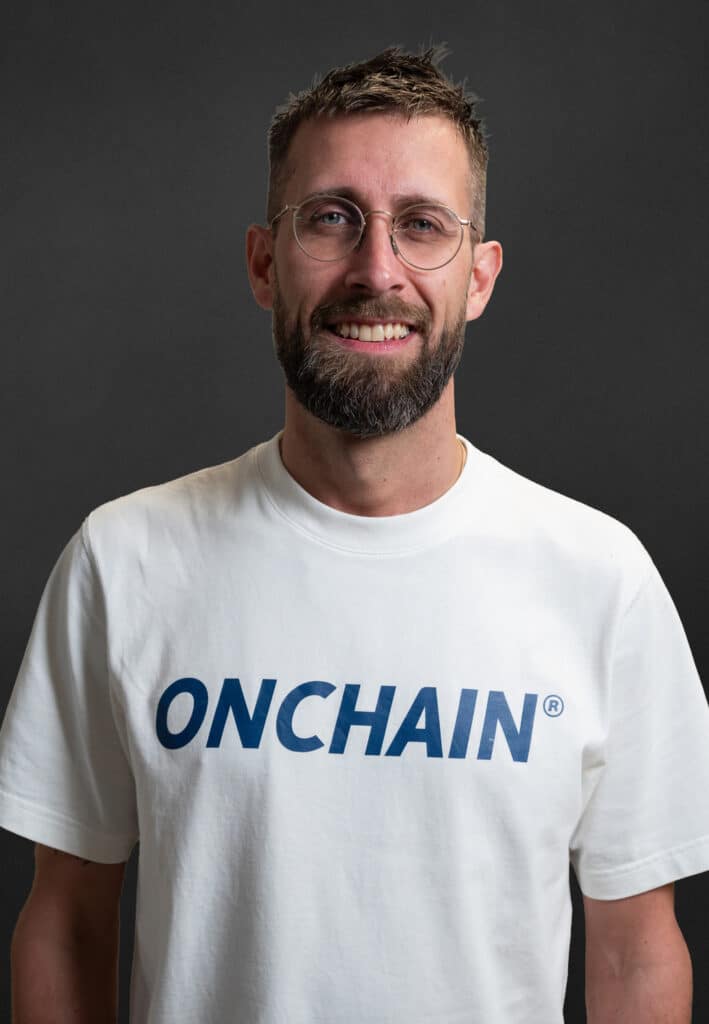
By Jason Dominique, CEO & Co-Founder, ONCHAIN® Labs
ONCHAIN® Gateway is the world’s first permissionless fiat-to-on-chain access layer. How will this make it easier for businesses and individuals to move money into Web3?
The current path to Web3 participation is broken, leading to a 68% drop-off for first-time users. We believe access should be a network primitive, not a fragmented service. Today, moving money into Web3 usually means opening an exchange account, passing KYC again, buying a gas token, moving it to a wallet, bridging, and then swapping. Every step adds friction, cost, and risk.
ONCHAIN® Gateway compresses this into a single, coordinated flow using the Universal Access Schema (UAS). A user or business simply states what they want to own on-chain, how they want to pay, and where they want final settlement. Gateway translates that intent into a verified access path, and the ONCHAIN® Protocol Network (OPN) executes the settlement.
For individuals, it feels like a familiar checkout—Click. Pay. Done. They can pay with cards, bank transfers, or crypto and receive the asset they actually want on its native chain, instead of being left with an illiquid fuel token on the wrong network. For businesses, Gateway operates like a neutral access layer to the entire on-chain economy. It is permissionless and non-custodial, so any compliant wallet, app, or platform can plug in without listings, bilateral contracts, or custody integrations. This reduces integration time, simplifies compliance, and makes it easier to offer Web3 features directly in mainstream products.
ONCHAIN® is building a financial internet where money moves by intent. Can you explain what that means and why it’s important for users and businesses?
The Intent Economy is a direct result of our foundational Decoupling Thesis: for finance to truly scale, custody (ownership) and service (access) must be fundamentally separated. In traditional finance, value moves by being pushed through accounts and ledgers. In an intent-based system, you start from the outcome, not the rail. You say, “buy this digital asset and send it to my wallet,” and the network is responsible for coordinating how that happens.
ONCHAIN’s OPN layer encodes these as signed intents, such as a BuyIntent or PayIntent. Once validated by our Smart Guardrails, OPN finds a deterministic, non-custodial path that satisfies liquidity and policy constraints across chains and payment methods. Value effectively travels as instructions until the very last step, when it settles on the target chain under the user’s control.
For users, this removes the confusing decisions about chains, bridges, and token pairs, replacing them with clear actions and predictable confirmations. For businesses, intents provide a clean abstraction for integrating on-chain capabilities into existing products and workflows. Compliance rules, risk filters, and treasury policies can be enforced at the intent level, meaning teams gain visibility and control without having to manage every underlying settlement route themselves.
Modular blockchain development is changing scalability and efficiency. How is ONCHAIN® using this approach to improve the user experience?
Modular development means breaking the stack into specialised components. At ONCHAIN®, we apply this principle to the access layer itself, so users do not have to think about any of it. The friction is removed at the source, allowing users to focus only on the desired outcome.
Gateway is the access and UX module: it handles discovery of verified assets, payment options, and a clear, consumer-grade checkout. OPN is the stateless coordination module: it interprets user intents, enforces Smart Guardrails on contracts, liquidity, and compliance, and orchestrates trust-minimal, native settlement across multiple chains. The underlying networks simply focus on execution and finality.
Because these modules are decoupled, we can rapidly add new chains, payment methods, and liquidity sources without redesigning the user journey. Upgrades can happen on OPN or Gateway without forcing users to change wallets or habits. For the end user, modularity is invisible. They see a single flow—Click. Pay. Done.—while the network seamlessly composes whichever specialised modules are needed to deliver that intent safely and efficiently.
The Coordination Economy is a new way to think about finance. How can companies in the Middle East take advantage of intent-based, trust-minimised financial infrastructure?
The Coordination Economy is infrastructure built for real-time, cross-border value transfer, defined by its non-custodial nature. This is a vital model for the Middle East, which prioritises strict regulatory alignment and risk management. In this model, networks handle intent matching, risk rules, and settlement, while businesses and users retain direct control over their assets.
For the Middle East, which sits at the intersection of trade, remittances, and regulated digital assets, this creates a practical opportunity. Companies can plug into an intent-based coordination layer like OPN and design flows that match how their markets actually operate.
A regional payments provider, for example, could use Gateway and OPN to allow customers to fund wallets in local currency while settling in stablecoins or tokenised deposits on regulated chains. A logistics or energy company could automate supplier payments and revenue sharing based on on-chain events, with funds settling directly into corporate wallets rather than pooled accounts. Because settlement is non-custodial and rules are encoded as Smart Guardrails, firms can maintain compliance and control while still benefiting from interoperability. That combination establishes OPN as the essential infrastructure layer aligned with the region’s focus on sovereign digital economies, innovation, and compliant cross-border connectivity.
What real-world use cases do you see driving the next wave of on-chain applications, and how will they impact businesses and everyday users?
We are moving into the on-chain service era, where the next wave of applications will be driven by real economic workflows rather than speculation. We see three areas defining this shift:
Payments and Treasury: Cross-border B2B payments, payroll, and automated treasury rebalancing are perfectly suited for an intent-based network. A business can express an intent like, “keep 40% of reserves in short-term tokenised assets,” and OPN can coordinate the necessary conversions and deterministic settlements while Gateway presents a simple interface.
Real-World Assets (RWA) and Financing: Tokenised invoices, inventory, funds, and real estate can be financed, traded, or used as collateral on-chain. Gateway gives businesses and individuals a direct, verified access path to these assets, while Smart Guardrails ensure that only approved contracts, liquidity pools, and settlement venues are used.
Network-Native Rewards and Machine Economies: Loyalty programs, creator payouts, and machine-to-machine payments for DePIN and IoT can all run on the same coordination layer. For businesses, this means programmable engagement and revenue sharing that can be integrated directly into their apps.
In short, ONCHAIN is building the native access layer that finally allows digital assets to become indispensable infrastructure, fulfilling the true promise of a programmable, global economy.