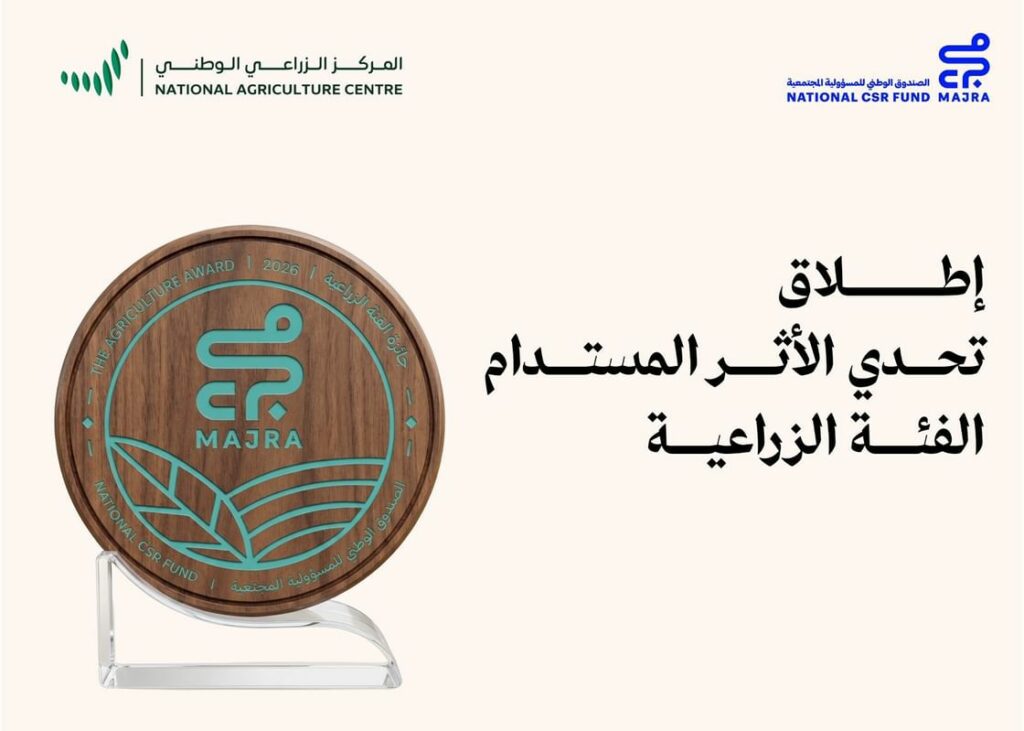
Majra – National CSR Fund, in partnership with the National Agricultural Centre, has introduced the agricultural category under the “Sustainable Impact Challenge” to strengthen the agricultural sector and advance sustainable impact across the UAE.

The launch took place during the UAE Agricultural Exhibition and Conference 2026 at ADNEC Al Ain, in the presence of Dr. Amna bint Abdullah Al Dahak, Minister of Climate Change and Environment and Chairwoman of the National Agricultural Centre.
This initiative aligns with the UAE’s national priorities to enhance food security and support the transition toward more efficient and sustainable production systems. It aims to scale applied agricultural solutions, increase their market reach, and improve overall sector resilience.
Majra highlighted that the new category focuses on practical, impact-driven agricultural projects that improve resource efficiency, support sector development, and strengthen sustainable food supply chains.

Sarah Shaw, CEO of Majra – National CSR Fund, said the agriculture category is designed to support projects that enhance production efficiency, optimise resource use, and improve the competitiveness of local agriculture, while also helping bring local products to market. She added that Majra is working to connect these initiatives with a wider ecosystem of government, private sector, academic, and non-profit partners to accelerate sustainable outcomes.
The “Sustainable Impact Challenge” is a national platform that enables individuals and organisations to present UAE-based projects addressing social and environmental challenges through innovative and scalable solutions.
Sultan Salem Al Shamsi, Director of the National Agricultural Centre, said the initiative marks an important step in empowering farmers and strengthening their role in improving productivity and sustainability across the agricultural value chain. He also emphasized the importance of cross-sector collaboration and private sector partnerships in supporting farmers and enhancing market access, contributing to national food security goals.
The agricultural category will spotlight projects that improve productivity, promote efficient resource use, and encourage environmentally sustainable farming practices. The challenge will progress through stages including project submission, public voting, and expert evaluation, with winning initiatives to be recognised at the Impact Summit scheduled for October.