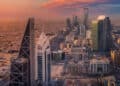
Every significant pause in Dubai’s construction history has been followed by a qualitative leap in what gets built next. After 2008, the market that re-emerged was more regulated, structured, and serious about what it means to deliver lasting value. The current pause is different in character, triggered not by financial excess but by a geopolitical shock that sent the DFM Real Estate Index down approximately 20% in under two weeks and caused buyer enquiries to drop around 45% almost overnight. Both are short-term sentiment measures, and physical property prices have remained largely stable. The cranes have not stopped. The UAE’s $860 billion active construction pipeline is still moving. What has paused is the frenzy. In its place is something the industry almost never gets: time to ask the questions that a boom never leaves room for.
Sheikh Mohammed bin Rashid Al Maktoum chose this moment to issue Law No. 3 of 2026 on the quality and safety of buildings in Dubai. The law is comprehensive: it applies to every building in the emirate regardless of age, location, or ownership structure, and it places occupant wellbeing at the centre of what a building is legally required to deliver. It is a statement about what Dubai’s built environment is actually for. The people living inside those structures, across decades.Not transaction cycles.
The buildings being decided on in the next twelve to eighteen months will still be standing in 2075. Dubai’s population is projected to reach 7.8 million by 2040, and up to 120,000 new residential units are expected to be delivered in 2026 alone. The most forward-looking developers and innovation teams are already asking not what a building delivers at handover, but what it delivers across its entire lifetime. Sick Building Syndrome taught the industry that invisible environments inside buildings have real consequences. The electromagnetic environment is the next chapter of that lesson.
Last week, the Global Wellness Institute released its Build Well to Live Well case studies, the first major international research dedicated entirely to wellness real estate in the UAE and Saudi Arabia, alongside new global market data. The UAE’s wellness real estate market has grown from $3.3 billion in 2017 to $14.6 billion in 2025 at 21% annual growth. Across both countries, wellness real estate now represents more than 12% of all construction, with 555,000 wellness-focused residential units in the pipeline. Globally, wellness real estate is now the fastest growing category in the entire real estate sector, having expanded from $151 billion in 2017 to $876 billion in 2025 and forecast to reach $1.8 trillion by 2030. Today’s buyers are not asking whether a building is energy efficient. They are asking whether it will actively protect the health of those residing in it.
Green building certification has been genuinely transformative here. The UAE’s commitment is real and its results are documented: 72,000 buildings in Dubai compliant with green specifications, the country the first in MENA to commit to net zero by 2050. But green measures a building’s relationship with the world outside. Dubai’s new building law, and the market data the GWI published last week, are both pointing toward the next question: what is the building’s relationship with the human body inside it for the next fifty years?
Wellness-focused residential properties globally command a price premium of 10 to 25% over conventional equivalents, according to the Global Wellness Institute, a gap that reflects a genuine shift in what buyers are willing to pay to protect their health inside a building. The data from EMFIS’s own benchmarked projects across nine properties suggests that low-EMF certification specifically is already delivering within that range, with a premium of between 6 and 24% above comparable neighbourhood valuations and an average added value of approximately 14% across all typologies and scales. Electromagnetic exposure is the dimension of that indoor environment that the market has not yet fully priced in, not because buyers do not care, but because the tools to measure and certify it have only recently become available.Through our work at EMFIS across projects in eight countries, including developments completed in the UAE, we have demonstrated that protecting the electromagnetic environment of a building requires no compromise on connectivity and an integration cost, when applied at design phase, that is a fraction of what remediation costs once the structure is complete. Once it is poured, that window closes for the lifetime of the building.
Every crisis builds something. The 2008 correction built a more regulated market. The Covid pause accelerated a wellness real estate sector now worth $876 billion globally. This pause, if used with the same intention, can build something more durable: a generation of buildings designed not just to stand for fifty years, but to genuinely serve the people inside them for every one of those years. For the developers making design decisions right now, that is not an aspiration. It is a choice.