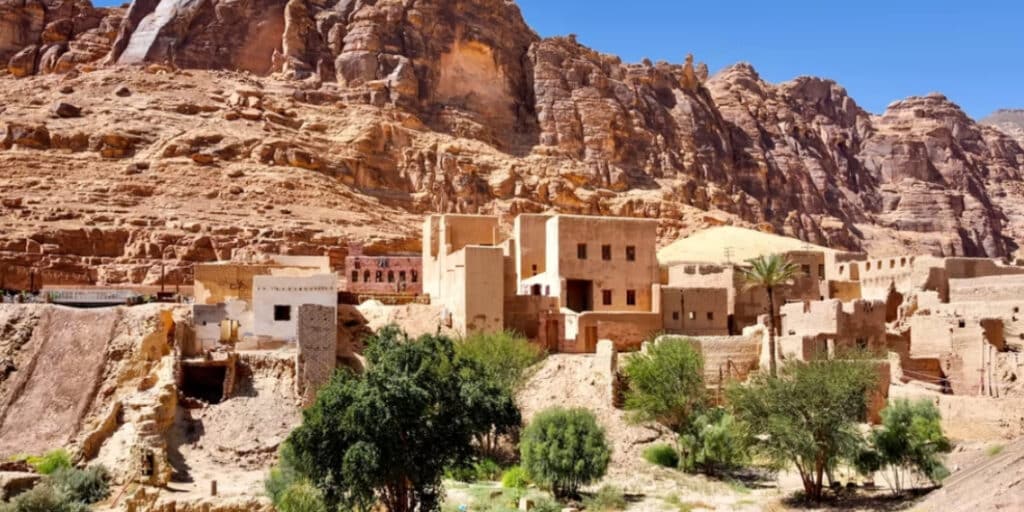
There are places in the world that stop you cold. Not because of what has been built, but because of what remains. AlUla is one of those places. Sitting in the north-western corner of Saudi Arabia, carved from rose-pink sandstone, AlUla was a hidden destination for two thousand years. And now, under Vision 2030, the Kingdom has decided the world is finally ready to see it.
For someone that have worked on many real estate projects and destinations, not only in Saudi Arabia but across multiple countries, I see that AlUla is different. This is not a giga-project built on ambition alone. It is an asset class rooted in irreplaceable geography, ancient civilization, and a government commitment that is, by any measure, fully funded and structurally serious.
A LANDSCAPE WRITTEN IN STONE
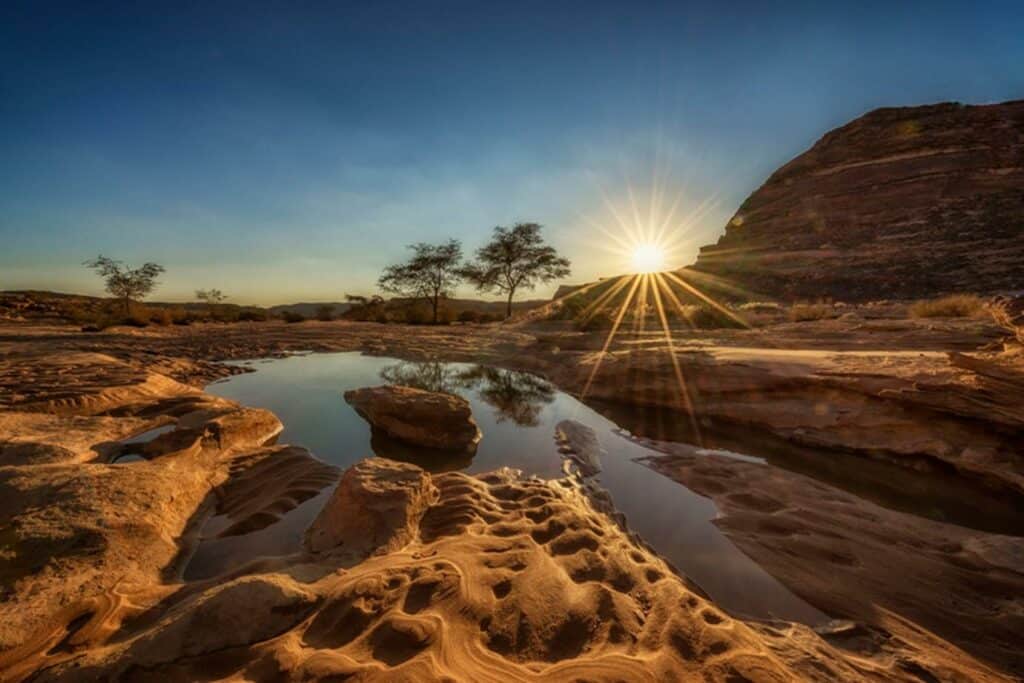
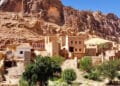
AlUla County spans 22,000 square kilometers of desert, canyon and mountain terrain in north-west Arabia — a landscape that feels, frankly, like it belongs on another planet. Ancient volcanic rock formations, towering sandstone cliffs sculpted by millennia of wind and time, and a fertile valley that once made AlUla one of the great crossroads of the ancient world. The Incense Road the trade artery that connected southern Arabia to the Mediterranean passed through here. So did the Nabataeans, the Lihyanites, the Dadanites. Civilization after civilization chose this valley for a reason.
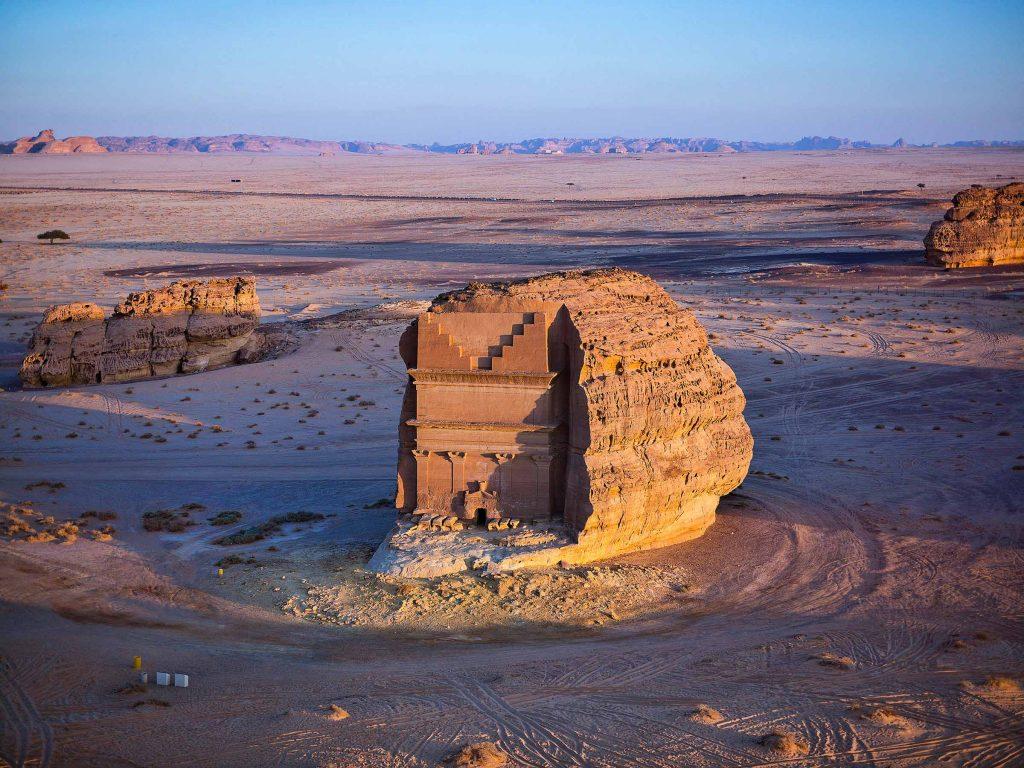
The centerpiece of that heritage is Hegra known historically as Mada’in Saleh Saudi Arabia’s first UNESCO World Heritage Site. Over 100 monumental rock-cut tombs, their facades carved with extraordinary precision into the sandstone outcrops, date back to the first century CE. These are Nabataean masterworks, contemporaries of Petra in Jordan, yet less visited, less crowded, and in some respects more striking for the silence that still surrounds them. AlUla’s history does not begin and end there. Ancient Dadan, capital of the Dadan and Lihyan kingdoms during the first millennium BC, has been described as one of the most developed cities of the Arabian Peninsula in its era. The open-air inscriptions of Jabal Ikmah an outdoor library of ancient Arabic script add yet another layer. The Royal Commission for AlUla estimates the county holds over 200,000 years of human history and 7,000 years of continuous civilization.
“AlUla is a museum. Every wadi and escarpment, every stretch of sand and rocky outline deserves the greatest consideration.” — Jean Nouvel
VISION 2030: THE ARCHITECTURE OF INTENT
Why AlUla? And why now? Because Vision 2030 was always about more than economic diversification numbers. It was about reimagining Saudi Arabia’s relationship with the world and AlUla is one of the most powerful instruments of that reimagination.
The Royal Commission for AlUla (RCU) was established specifically to govern the long-term development of this extraordinary county. The masterplan built around 12 guiding principles of sustainable, responsible development targets two million visitors annually by 2035. AlUla’s new airport is operational. Maraya, the 500-seat mirrored concert hall and events venue the largest mirrored structure in the world has already hosted world-class performances. A French government partnership, unique in scope and ambition, has brought leading archaeological, curatorial and architectural expertise directly into the development process.
THE INVESTMENT CASE: SCARCITY COMPOUNDED BY CAPITAL
What makes AlUla an investment destination is the convergence of three forces that rarely meet: irreplaceable physical scarcity, sovereign-backed capital deployment at scale, and world-class architectural ambition that is already reshaping the destination’s identity.
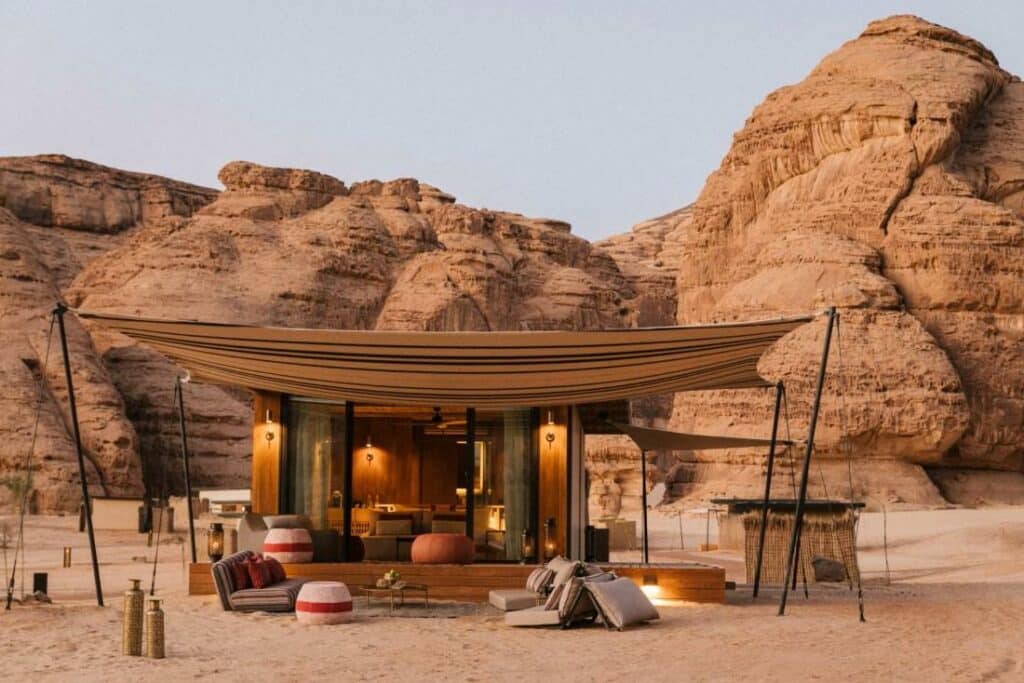
On the hospitality side, the pipeline includes Aman Group and Six Senses which are already committed. The Jean Nouvel-designed Sharaan Nature Resort a subterranean hotel carved directly into the sandstone cliffs of the Sharaan Nature Reserve, featuring suites, pavilions and villas built from the living rock is progressing. Crown Prince Mohammed bin Salman personally visited the Sharaan project in December 2024.
Heritage tourism globally has proven its premium credentials. Properties and hospitality assets adjacent to UNESCO sites consistently outperform comparable assets in generic locations in occupancy rates, in average daily rates, and in long-term capital appreciation. AlUla compounds this premium with controlled supply.
THE BROADER CONTEXT: SAUDI REAL ESTATE IN 2026
To fully appreciate AlUla’s investment case, it must be read against the wider Saudi real estate backdrop. Foreign investment into the Kingdom reached SAR 3 trillion by 2025 a 16% increase and the abolition of the Qualified Foreign Investor regime in February 2026, replaced by direct market access, has removed a structural barrier that previously kept many international investors at arm’s length. The IMF projects Saudi GDP growth of 3.9% in 2026, with non-oil GDP expanding faster. FDI net inflows hit SAR 24.9 billion in Q3 2025, up 34.5% year on year.
AlUla sits within this macro tailwind, but it also benefits from something most Saudi real estate assets do not have: a global cultural narrative. Riyadh competes with other capital cities. AlUla competes with Petra, with the Serengeti, with Angkor Wat. That is a different and significantly larger addressable market.
MY READ
I have always believed that the best real estate investments where the fundamentals are structurally protected and AlUla has it.
The Nabataeans who carved Hegra into the rock two thousand years ago were not building for tourism. They were building for eternity. In AlUla, ancient permanence and modern ambition meet.