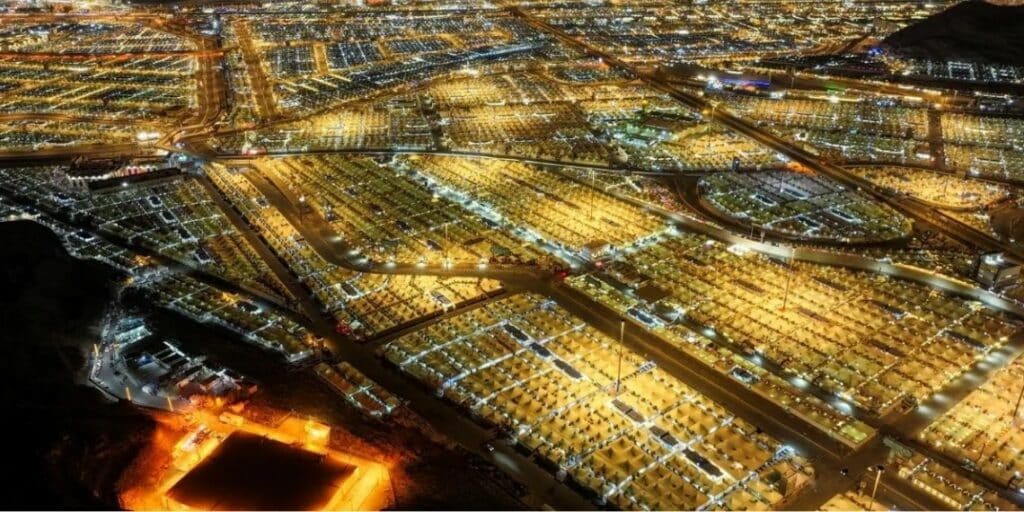
Each year during Hajj, the Holy Sites are rapidly transformed into one of the world’s largest seasonal smart cities, capable of hosting millions of pilgrims through an extensive and highly coordinated network of energy, water, transport, communications, and digital infrastructure.
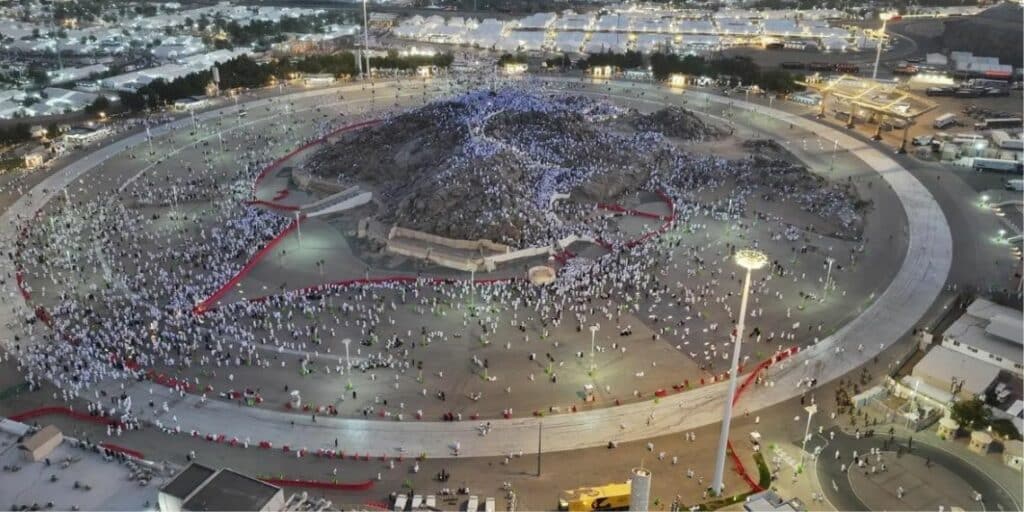
Behind the scenes, continuous operations led by government entities and service agencies manage crowd flows, ensure efficient mobility, and maintain high levels of safety and comfort for pilgrims before the sites return to their normal state after the completion of Hajj rituals.
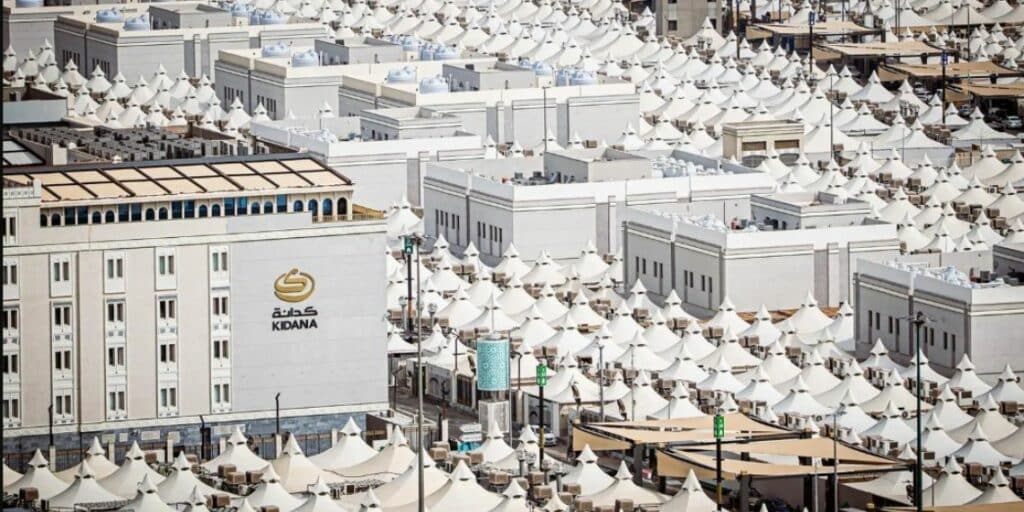
Kidana Development Company, the executive arm of the Royal Commission for Makkah City and Holy Sites, continues to implement major infrastructure and operational projects aimed at improving services and ensuring sustainable performance throughout the Hajj season.
Among these initiatives is the cooling and shading of the area surrounding Jabal Al-Rahmah (Mount Arafat), covering more than 392,000 square meters and increasing the number of beneficiaries fivefold compared to last year.
In the healthcare sector, Kidana has doubled bed capacity by expanding Mina Emergency Hospital, strengthening emergency preparedness and enhancing medical response services during Hajj.
Pedestrian infrastructure has also been significantly improved, with 103,000 square meters of shaded walkways and over 66,000 square meters of newly developed rest areas to enhance pilgrim comfort and ease movement.
As part of the Green Holy Sites initiative, more than 60,000 trees have been planted, tripling green coverage across key areas.
At the Jamarat facility, traditional cooling systems have been upgraded with 400 misting fans, boosting cooling capacity to serve around 360,000 pilgrims per hour—double the previous capacity.
Efforts to improve the visual and urban environment in Muzdalifah have also been carried out under a broader “humanizing the Holy Sites” initiative.
Mobility and accommodation infrastructure has been expanded through the installation of 74 escalators connecting Mina’s hillside camps, as well as new lodging projects including the Kidana Al-Khayf tent complex spanning 24,000 square meters and the Rabiah Kidana project covering more than 33,000 square meters.
Sanitation services have also been upgraded, with 516 facilities and nearly 17,000 toilets introduced, reducing waiting times by 75% while maintaining high accommodation capacity.
In Muzdalifah and Arafat, more than 6,900 additional toilets have been added through 411 sanitation complexes, bringing the total number of restroom facilities across the Holy Sites to over 115,000.
Further upgrades include enhancements to fire safety systems, cooling networks, power infrastructure, and field service operations across pilgrim camps.
This integrated operational model highlights Saudi Arabia’s ability to manage one of the world’s most complex seasonal gatherings using advanced digital systems and smart infrastructure, effectively transforming the Holy Sites into a temporary yet highly advanced city that serves millions of pilgrims each year.