The Sharjah Ports, Customs and Free Zones Authority has launched an integrated logistics corridor in coordination with Oman Customs to strengthen connectivity between Sharjah and Omani ports via land borders.
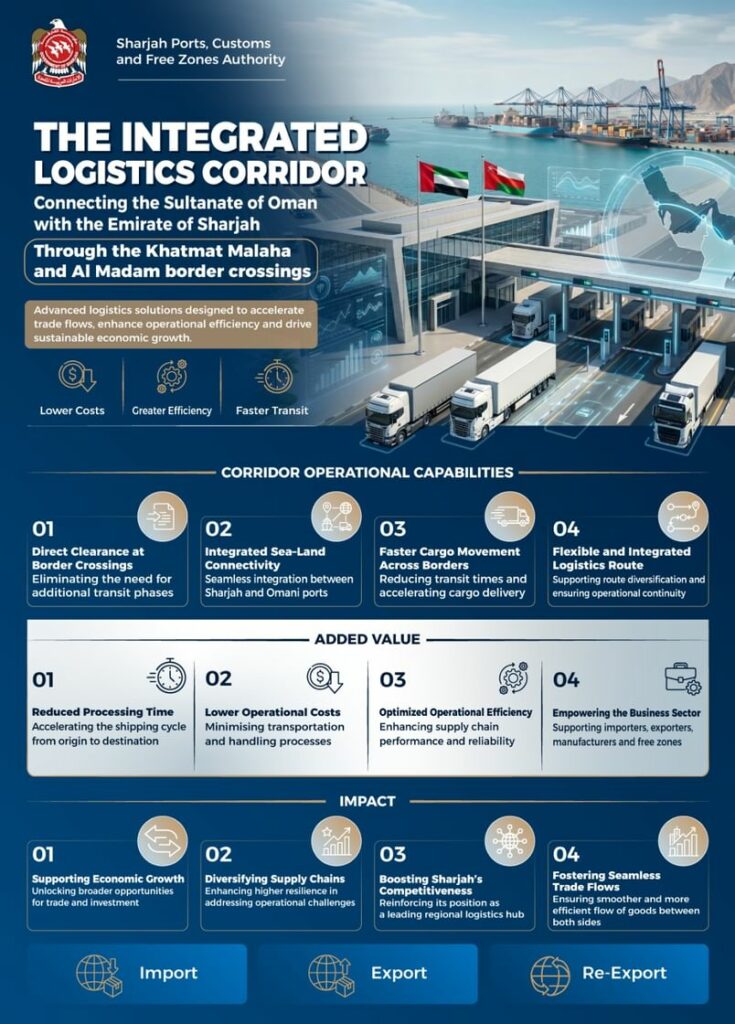
The initiative is designed to improve regional supply chain efficiency, enhance trade flows, and expand logistics options for businesses. It links key Omani ports, including Sohar, Duqm, and Salalah, into a flexible transport network that supports continuous and adaptable trade movement.
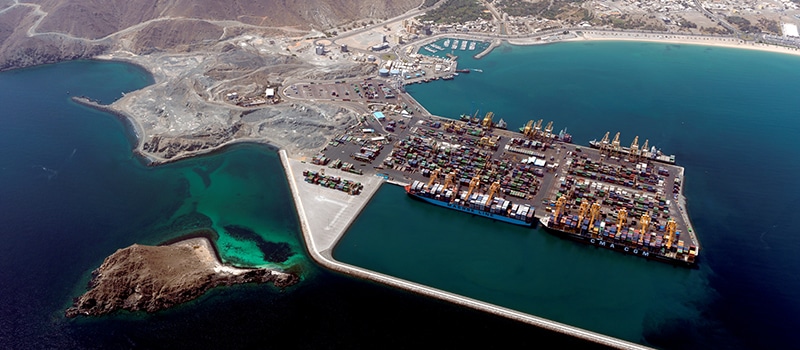
The corridor is part of Sharjah’s broader logistics ecosystem, which integrates maritime and land transport. It builds on the role of major ports such as Khorfakkan Port, a key regional maritime hub, while extending connectivity through land crossings including Khatmat Malaha in Kalba and Al Madam.
Operations officially began on 14 May following the completion of technical and coordination requirements between both sides. Initial shipments have already moved from Port Khalid to Sohar Port via Khatmat Malaha, marking the start of live operations and two-way cargo flow between the UAE and Oman.
The corridor enables customs clearance at Sharjah border points, removing additional transfer stages and significantly reducing processing time, transport costs, and cargo release delays. It is supported by fast-track lanes, pre-clearance systems, real-time data exchange, and joint customs coordination.
This integrated system enhances import, export, and re-export operations, allowing businesses in Sharjah’s free zones and wider UAE markets to access regional and global supply chains more efficiently. It also improves resilience by diversifying logistics routes and reducing dependency on single transport channels.
A joint working team has been established to oversee operations, data sharing, and compliance with international customs and security standards. Both authorities say the corridor reflects deepening UAE–Oman economic cooperation and reinforces Sharjah’s position as a regional logistics hub.
Future plans include expanding the corridor to include air freight services, further strengthening multimodal transport integration and regional trade connectivity.