
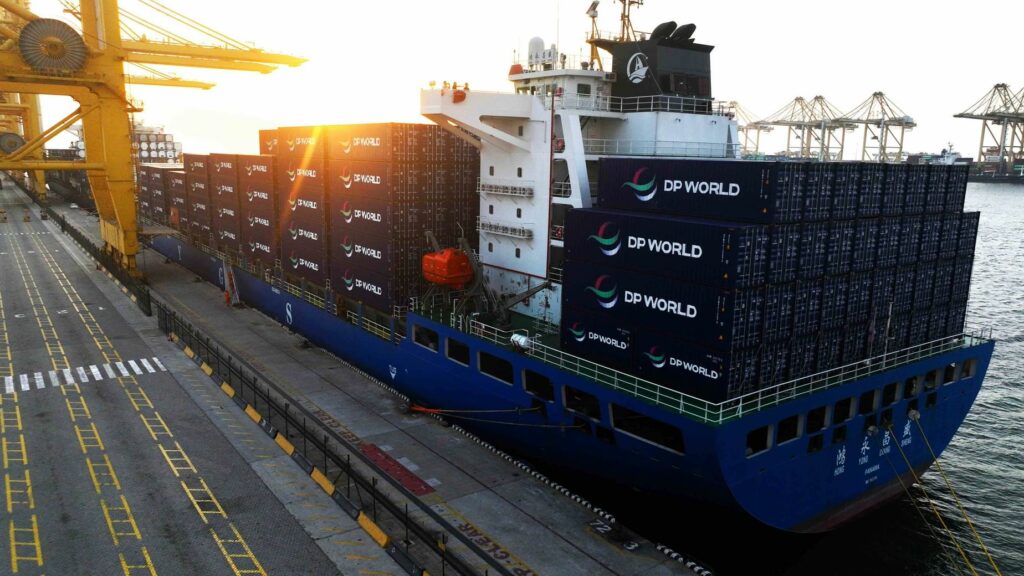
DP World said it continues to help customers maintain the smooth movement of goods by linking sea, rail, and road networks, which are becoming increasingly vital to supply chain resilience.
In its latest whitepaper, A $60.7 Billion Opportunity: Multimodal Transport and the Future of Global Trade, the company explores how integrated transport systems are transforming the way goods move across regional and global markets.
Amid rising geopolitical uncertainty, port congestion, and climate-related challenges, the ability to shift cargo seamlessly between different transport modes is emerging as a key competitive advantage.
Industry forecasts indicate that the global multimodal transport market is expected to reach nearly $160 billion by 2032, reflecting a $60.7 billion growth opportunity driven by demand for more agile, transparent, and reliable supply chains.
This growth is being supported by coastal and feeder shipping services that link regional ports, as well as rail and road networks that extend cargo transportation inland, enabling more connected end-to-end logistics across major trade corridors.
For DP World, this shift is already underway across its global operations. Through its Marine Services division, the company connects over 200 ports worldwide and facilitates more than 23,500 sailings annually. Its Shipping Solutions business handles around 6 million TEU, providing the coastal and feeder connectivity that supports global trade flows.
These maritime services are increasingly integrated with inland logistics, including rail and road transport, allowing customers to move cargo more efficiently across key trade routes.
This corridor-based model is gaining importance as supply chains move away from traditional linear structures toward more interconnected regional networks.
As trade patterns evolve, shaped by resilience, regionalisation, and faster delivery demands, companies are seeking transport systems that can adapt across multiple modes while ensuring visibility and reliability from origin to destination.
In response, DP World is strengthening links between ports, marine operations, and inland logistics to deliver more integrated supply chain solutions. This includes expanding coastal and feeder networks beyond major hubs, improving inland connectivity through rail and road integration, and enhancing coordination across the full cargo journey.
These developments position DP World to support customers in an increasingly corridor-driven trade environment, where operational resilience is becoming a critical requirement.
Ganesh Raj, Global COO of Marine Services at DP World, said: “As supply chains face growing disruption, the ability to connect ports, marine services, rail, and road into integrated trade corridors is becoming essential. DP World is helping customers maintain reliability and efficiency by enabling more flexible and connected cargo flows across these networks.”