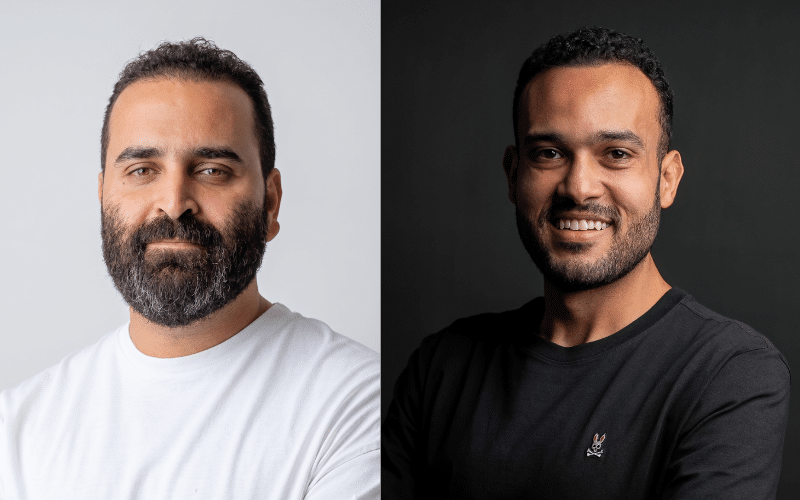
As brands across the GCC chase reach and follower counts, Digital Champions partners Ahmed Yossry and Mohamed El-Daly are making the case for something harder to measure and more valuable in the long run.
Ahmed Yossry, CEO and Partner, and Mohamed El-Daly, Managing Partner at Digital Champions, spent years building client partnerships across Cairo, Dubai and Doha before formalising the agency’s regional presence. The decision, when it came, was deliberate.
“We are not trying to establish a presence in every market overnight or participate in every opportunity available,” says Yossry, CEO and Partner. “The focus is on building the right client partnerships, in the right sectors, supported by the right operational structure and talent, so that growth remains sustainable and strategically aligned over the long term.”
The agency is now formalising its regional presence, but the philosophy has not changed. Digital Champions is not chasing scale for its own sake. What the two oartners are more interested in is a question that some agencies sidestep: what does a brand’s digital presence actually do for the business?
“The more important question is whether digital activity is influencing audience perception and behaviour in a measurable way,” says Yossry. “Are people choosing the brand more often? Are they engaging with it consistently? Are they returning to it over time?” A campaign can generate significant impressions, he points out, and still contribute very little to long-term brand value if it does not strengthen affinity, trust or business performance.
El-Daly, Managing Partner, who has worked with more than 100 brands across EMEA, sees a related problem playing out consistently across the GCC. The most common mistake brands make is treating the region as a single, uniform audience. “The cultural nuances between markets such as the UAE, Saudi Arabia, Kuwait and Qatar are significant, particularly in terms of humour, tone, platform behaviour, language and social dynamics. Many brands apply one brief across multiple markets and then struggle to understand why the work underperforms.”
The overcorrection is equally damaging. International brands often localise so aggressively that they end up diluting their own identity in the process. “Audiences in this region are extremely digitally sophisticated and culturally aware. They do not necessarily expect brands to sound different simply for the sake of sounding local. What they respond to is authenticity, cultural fluency and genuine understanding rather than performative adaptation.”
El-Daly calls this cultural duality — building ideas with the audience context already embedded into both strategy and creative, rather than added on at the end. For international brands including recent wins Pret A Manger and Pacsun, that process starts from the earliest stages. “In the Middle East, small details often determine whether a campaign feels genuinely relevant or disconnected from the audience. Timing, references, humour, pacing, language choices and even what remains unspoken can carry significant cultural meaning.”
On trends, both partners are clear-eyed. “Trends are valuable because they reveal shifts in audience attention, language and behaviour, but they are often temporary by nature,” says El-Daly. “If a brand builds its identity entirely around reacting to trends, it risks becoming inconsistent and difficult for audiences to connect with over time.” The stronger play, he argues, is building a clear point of view and a consistent presence — one that allows a brand to participate in culture naturally without needing viral validation to stay relevant.
For Yossry, the next three years are about going deeper rather than wider. “Responsible expansion means ensuring that every market we enter is supported by the right combination of talent, infrastructure and client demand before scaling further. We do not believe in opening offices simply to establish visibility or regional presence.” It is the same principle they apply to their clients — build something that lasts rather than something that merely appears.