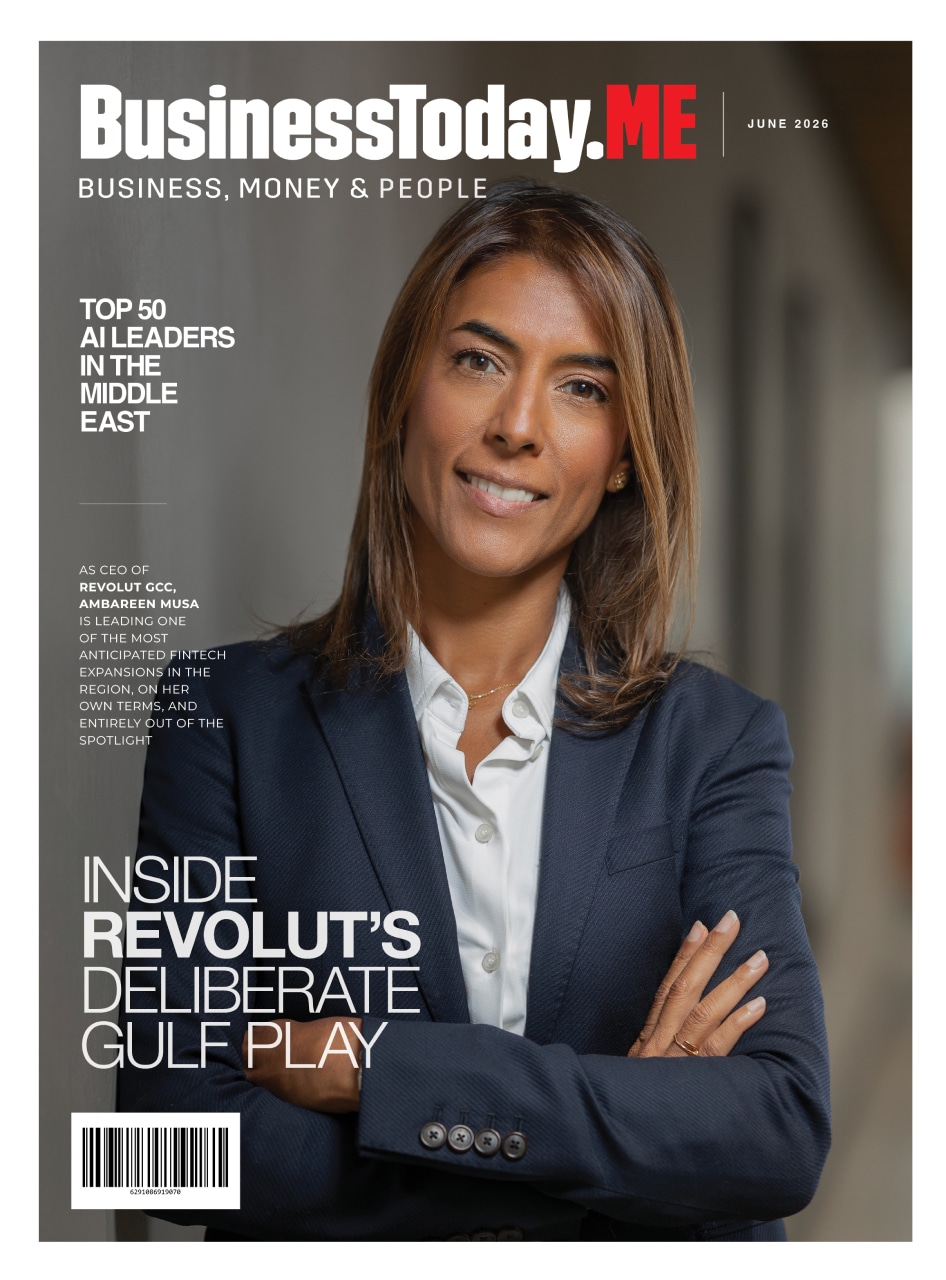
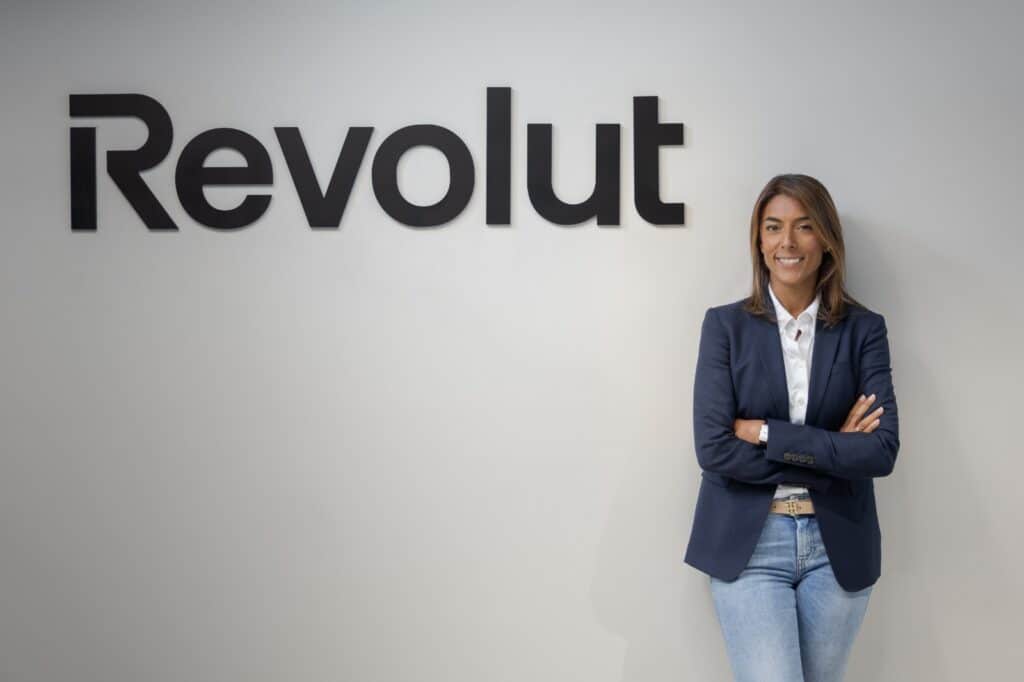
This cover story was first published in the June 2026 issue of Business Today Middle East.
As CEO of Revolut GCC, Ambareen Musa is leading one of the most anticipated fintech expansions in the region, on her own terms, and entirely out of the spotlight.
On the Foundations
Revolut has spent the last decade changing the way Europe thinks about money. Seventy million people later, a $45 billion valuation, and a product that has redefined what a financial app can be — the company is now setting its sights on the Gulf. Leading that expansion is Ambareen Musa, a CEO who knows this region well enough to understand that arriving with noise is far less powerful than arriving with something that actually works.
“When you are building in financial services, especially in a market like the UAE, the real focus is on foundations,” she says. “That means working closely with regulators, building the right governance structures, investing in infrastructure, hiring the right talent and deeply understanding the local market before anything is publicly visible.”
For Musa, that approach reflects the reality of financial services in the UAE. This is a market that rewards innovation, but it also expects evidence. New entrants are judged less by launch announcements than by the strength of the foundations beneath them.
“Financial confidence still feels out of reach for far too many people, regardless of income level or background.”
A Personal View of a System Gap
Long before Revolut, long before the GCC mandate, there was a frustration that Musa carried throughout the roles she had held. It is something you keep seeing in the way ordinary people relate to their own money.
“Financial confidence still feels out of reach for far too many people, regardless of income level or background,” she says. “A lot of people are navigating major financial decisions without feeling fully informed or in control, and I think the industry has a real responsibility to change that.”
In the UAE, it takes on a particular weight. The country’s population is one of the most internationally mobile anywhere on earth, and for most residents, managing money extends far beyond a single economy. Salaries earned here rarely stay here — they cross borders, support families and move through systems that might never be designed to talk to each other. The financial tools most people rely on for all of that have not always kept pace with how their lives actually work.
“Technology gives us the ability to simplify finance in a way that was not possible before,” she says, “whether that is helping people better understand their spending, manage money across borders more easily, build healthier financial habits or access tools that genuinely improve their day-to-day lives.”
That is the gap Revolut was built for. And the UAE, Musa will tell you, is where closing it matters most.
What the Region Teaches You
Musa is not arriving in the Gulf as an outsider. She has built here, advised here, and watched the region’s financial landscape move through several cycles of ambition, disruption and reinvention. When she talks about what the Middle East has given her that no other market could, her answer reflects years spent building and operating within the region’s financial ecosystem.
“The Middle East has taught me that some of the strongest financial ecosystems are built when innovation, regulation and established institutions evolve together with a shared ambition to improve customer experiences,” she says.
What makes this region different, in her experience, is something that takes time to fully appreciate. It is not the scale of the opportunity or the pace of infrastructure development. It is the collective orientation toward progress — a maturity across institutions, regulators and consumers that creates an environment where ambition is met with genuine readiness rather than resistance. That, she says, is what makes the Gulf genuinely compelling to build within.
“Success here is not just about technology or scale,” she says. “It is about understanding how people actually live, especially in such an international market where customers manage financial lives across borders every day.”
On Leading Through a Moment Like This
The landscape Musa is navigating would give most leaders pause. Artificial intelligence is reshaping financial products faster than most organisations can absorb. Consumer expectations are accelerating in the same direction. The competition in the GCC includes not just the region’s most established financial institutions but a growing number of global players who have identified exactly the same opportunity.
“I think moments like this require leaders to be both ambitious and disciplined at the same time,” she says. “Trust matters more than speed alone. That means staying focused on long-term credibility, close regulatory relationships and operational excellence, even when external attention accelerates.”
Clarity matters to her as much as ambition — not the kind that comes from having every answer, but the kind that comes from being honest about direction and purpose. “Teams move faster when they understand not only what you are building, but why you are building it.” And she is candid about the limits of certainty in a world changing this quickly. “The pace of technological and consumer change is so significant that no leader can operate with a fixed mindset anymore. The best organisations are the ones constantly learning, adapting and staying close to their customers.”
Underlying many of Musa’s observations is a recurring theme: trust. While much of the conversation around fintech focuses on speed, innovation and new technology, financial services operate under a different set of expectations. Products can evolve quickly. Trust rarely does.
That reality becomes particularly relevant in periods of rapid technological change. As artificial intelligence reshapes customer experiences and competition intensifies across the sector, institutions are increasingly challenged to balance innovation with reliability. For leaders operating in financial services, growth and credibility are not separate priorities; they have to develop together.

The Case for Revolut in the Gulf
When Musa makes the case for Revolut in the UAE, she does not reach for disruption language.
“We do not see this as a story of replacing existing institutions. We see it as contributing to an ecosystem that is already driving innovation at a global level.”
The product argument is a straightforward one at its core. Revolut brings together payments, global spending, currency exchange, transfers and lifestyle services in a single platform. In a market where the average resident is managing financial obligations across multiple countries simultaneously, that integration is not a feature — it sits at the heart of what Revolut offers here. “Many residents manage financial lives across multiple countries, currencies and time zones,” she says. “That creates demand for financial services that feel global from day one, rather than nationally limited.”
Revolut’s ambition is to be a top three financial app in every market it enters. In the GCC, Musa is measured about what earning that position actually requires. Not aggressive pricing, not a high-profile debut, but the kind of sustained relevance that comes from genuinely improving how people manage their financial lives. “If customers feel that Revolut genuinely simplifies and improves the way they manage their financial lives, growth follows naturally from that.”
“We do not see this as a story of replacing existing institutions. We see it as contributing to an ecosystem that is already driving innovation at a global level.”
Doing the Work Nobody Sees
Much of Revolut’s work in the UAE has taken place outside public view. With its licence application still in process, the focus has been on building the structures required to operate in a highly regulated market rather than generating visibility.
That reflects a broader reality across financial services. Customers often experience only the final product, while the most consequential work happens much earlier — in governance frameworks, regulatory engagement, infrastructure investment and operational preparation. These are rarely the most visible parts of growth, but they are often the most important.
“It has been one of the most interesting and rewarding building phases of my career because so much of the work happens long before customers ever see the product,” she says.
“You are not just introducing a product. You are becoming part of a broader financial ecosystem that is evolving very quickly. That requires patience, discipline and a long-term mindset throughout the entire building process.”
When UAE customers eventually open the Revolut app for the first time, she has a precise and personal sense of what she wants that moment to feel like. Not dazzled by the brand or impressed by the design but simply understood. “I want them to feel that managing their financial life has suddenly become much more seamless. The goal is for people to open the app and feel that their financial world is working together in one place, in a way that feels smooth, modern and genuinely helpful to their everyday lives.”

What She Actually Wants to Leave Behind
Beneath the commercial ambition and the product roadmap, there is something quieter and more personal driving Ambareen Musa — a sense of purpose that has less to do with market rankings and everything to do with what she has always believed the industry owes the people it serves.
“I would like the legacy to be bigger than a company launch or market expansion,” she says. “I hope we contribute to building a financial ecosystem that is more accessible, more transparent and more globally connected for the next generation.”
Financial literacy sits close to the heart of that hope — not as a corporate programme, but as a conviction that has run through her entire career and shows no sign of softening. “One of the things I have observed throughout my career is that financial literacy still feels intimidating for many people, regardless of income level or background. If we can help simplify finance and make people feel more in control of their money, that has a very real societal impact.”
And beyond Revolut, beyond the GCC launch, she holds a wider hope for the region itself — one that speaks to something she clearly feels deeply. “I would love to see more regional talent entering fintech and technology leadership roles over time. The Middle East has incredible ambition and creativity, and I think we are only beginning to see the scale of what can emerge from this region.”
Revolut has not launched in the UAE yet. When it does, the groundwork will already have been done — carefully, patiently and almost entirely out of sight. The governance structures, regulatory engagement and operational foundations that precede a launch rarely attract attention, yet they often determine what follows. Everything visible comes after.
*Revolut’s UAE licence is pending at the time of publication.