The Saudi Ministry of Energy has officially opened the prequalification phase for private developers to establish, own, and operate a comprehensive truck-based Compressed Natural Gas (CNG) distribution network. Targeting the Riyadh and Eastern Provinces, this initiative serves as a virtual pipeline network designed to deliver natural gas directly to industrial hubs. This strategy accelerates the Kingdom’s Liquid Fuel Displacement Program, replacing traditional liquid fuels with cleaner, more cost-effective gas solutions.
CNG Truck Logistics Qualification Timeline (2026)
| Milestone Phase | Fixed Deadline Date | Official Source | Focus Regions |
| Launch of Qualification Phase | May 2026 | Saudi Press Agency (SPA) | Riyadh & Eastern Province |
| Booklet Acquisition Deadline | June 18, 2026 | Ministry of Energy | National Scale |
| Document Submission Deadline | July 30, 2026 | Saudi Gazette | Sector-Specific Bidders |
| Program Alignment | Vision 2030 Target Metric | Liquid Fuel Displacement | Industrial Decarbonization |
How do virtual CNG pipelines support industrial localization?
The introduction of truck-based CNG tankers addresses a critical infrastructure challenge: providing immediate natural gas access to industrial facilities located outside the footprint of the permanent Master Gas System (MGS). By utilizing high-tech mobile distribution networks, the Ministry of Energy is creating a flexible, on-demand supply chain. This allows factories in developing industrial cities to immediately lower their operating costs and transition away from diesel, accelerating the output of localized manufacturing.
What are the technical requirements for the private sector tenders?
The prequalification process is designed to select consortia capable of managing complex, high-pressure logistics systems. Bidding entities must demonstrate compliance with the Energy Supply Law and the Natural Gas and Natural Gas Liquids Activities Regulation. Qualified operators will be responsible for the full lifecycle of the project—including compression stations, specialized transport fleets, and pressure-reduction setups at customer sites—ensuring that the private sector drives technical efficiency and smart energy distribution.
What are the environmental and macroeconomic benefits of this rollout?
From a macroeconomic perspective, displacing liquid fuels like heavy fuel oil and diesel with natural gas preserves higher-value crude oil for optimal export markets, maximizing national oil revenues. Environmentally, the transition provides an immediate reduction in carbon intensity across major industrial zones. This aligns directly with the environmental mandates of Saudi Vision 2030, helping local industries meet strict carbon-efficiency baselines necessary to compete in international export markets.
Frequently Asked Questions (FAQ)
What is a truck-based CNG distribution project?
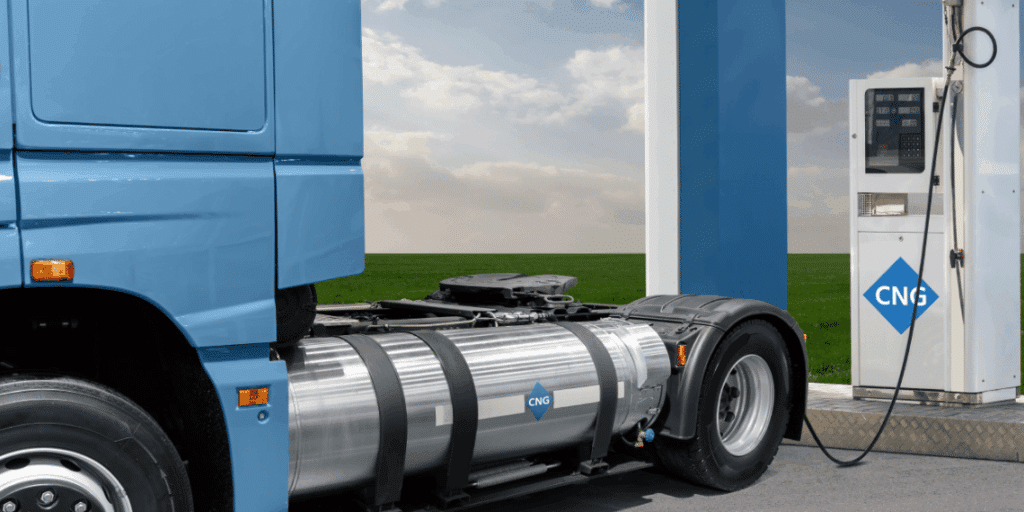
A truck-based CNG distribution project — also called a “virtual pipeline” — works in four steps: natural gas is compressed to around 250 bar at a central mother station; loaded into specialized high-pressure tube trailers (typically carrying 3,000–5,000 kg of CNG per trip); transported by road to industrial customers; and decompressed at a daughter station on-site where it feeds directly into the facility’s gas-powered equipment. The system is cost-effective for industrial clusters located 50–300 km from the nearest gas pipeline, making it ideal for Riyadh’s developing industrial cities and Eastern Province manufacturing zones currently served only by diesel or heavy fuel oil.
Which regions are included in the May 2026 tender launch?
The Phase 1 tender covers infrastructure development and CNG logistics operations within the Riyadh Province and the Eastern Province. These two provinces were selected because they contain the highest concentration of industrial facilities dependent on liquid fuels and are within practical trucking range of Saudi Aramco’s gas compression infrastructure. Future phases are expected to extend coverage to Makkah, Madinah, and Jazan provinces as the network scales.
When is the final deadline for private sector submissions?
The qualification process has two fixed deadlines. Companies must request the official qualification booklet by June 18, 2026, and submit their completed qualification documents no later than July 30, 2026 via the Ministry of Energy submission portal. Late submissions will not be considered. Qualifying consortia will be invited to submit full technical and commercial proposals in a subsequent RFP phase expected in Q4 2026. All requirements and formats are detailed in the official booklet available from moenergy.gov.sa.
How does this project impact the “Future Factories” program?
The CNG network is a direct enabler of the Future Factories programme in two ways. First, affordable gas lowers the energy cost baseline for industrial operators, freeing capital for automation equipment, robotics, and AI-driven process monitoring — the core investments the programme incentivises. Second, the reduced carbon intensity of CNG versus diesel helps factories meet the emissions efficiency criteria required for Future Factories digital-readiness grants and concessional SIDF financing. Factories switching to CNG can expect to reduce their industrial carbon footprint by 25–30% per unit of energy consumed compared to liquid fuel alternatives.