Saudi Public Investment Fund (PIF) has officially entered its most significant phase of recalibration. Valued at approximately $925 billion, the fund has soft-launched its 2026–2030 Strategy, signaling a move away from purely futuristic real estate toward tangible industrial and technological leadership.
1. The “Reset”: Discipline Over Grandeur
The defining feature of the new strategy is a “pragmatic re-scoping” of several high-profile mega-projects.
- NEOM & The Line: Once centered on 170km of urban mirrors, NEOM is pivoting its 2026-2030 priorities toward renewable energy, green hydrogen, and advanced manufacturing. The goal is to move from “symbolism” to “commercial viability.”
- Scaling Back Real Estate: Projects like the Mukaab (New Murabba) and other capital-intensive skyscrapers are being reassessed for feasibility and ROI. This ensures that the Kingdom’s capital is directed toward projects with shorter-term economic returns.
- Fiscal Responsibility: With oil prices fluctuating below the levels needed to fully fund the original Vision 2030 timeline, the PIF is now prioritizing global capital inflows and partnerships with international asset managers.
2. The New Core Pillars: AI, Minerals, and Tourism
The 2026–2030 blueprint identifies four key sectors that will drive the next wave of non-oil growth:
- Artificial Intelligence: PIF is positioning the Kingdom as a global AI hub. This includes the launch of Humain, a PIF-backed AI firm, and the integration of AI across logistics, healthcare, and finance.
- Minerals & Mining: With over $1.3 trillion in untapped mineral wealth, the PIF is accelerating the “Mining the Future” initiative to supply critical materials for the global green transition.
- Industrial & Logistics: A massive shift toward localizing supply chains. PIF aims to reach 60% local content by 2030, turning the Kingdom into a manufacturing corridor between Europe, Asia, and Africa.
- Tourism 2.0: Moving beyond just building hotels, the focus is now on integrating ecosystems, linking aviation (Riyadh Air) with cultural destinations to meet the new 150 million visitor target.
3. Empowering the Private Sector
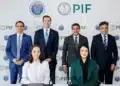
At the PIF Private Sector Forum 2026, Governor Yasir Al-Rumayyan emphasized that the next five years belong to private enterprise.
- From Launching to Accelerating: The PIF is moving from “building sectors” to “accelerating growth” by offering SAR 70 billion in new investment opportunities for private firms.
- SME Integration: A specialized “Private Sector Hub” has been launched to help small and medium enterprises (SMEs) plug into the supply chains of giga-projects.
- Local Content Impact: Between 2020 and 2024, PIF portfolio companies spent SAR 591 billion on local content, a figure expected to nearly double by 2030.
4. Strategic Outlook for 2026–2030
The PIF’s evolution from a domestic developer to a global investment platform is nearly complete. By 2030, the fund aims to manage over $2 trillion in assets, with a diverse portfolio that balances visionary long-term bets with immediate industrial outputs.
PIF Strategy Comparison: 2021 vs. 2026
| Feature | 2021–2025 Strategy | 2026–2030 Strategy |
| Primary Focus | Establishing Giga-Projects | Industrial & AI Ecosystems |
| Project Scope | Expansive / Futuristic | Disciplined / Re-scoped for ROI |
| Private Sector | Developing Suppliers | Core Strategic Partners |
| Funding Source | Predominantly State-Led | Global Asset Management & FDI |
| Key Metric | Job Creation & Diversification | Commercial Profitability & Localization |