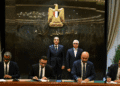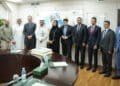
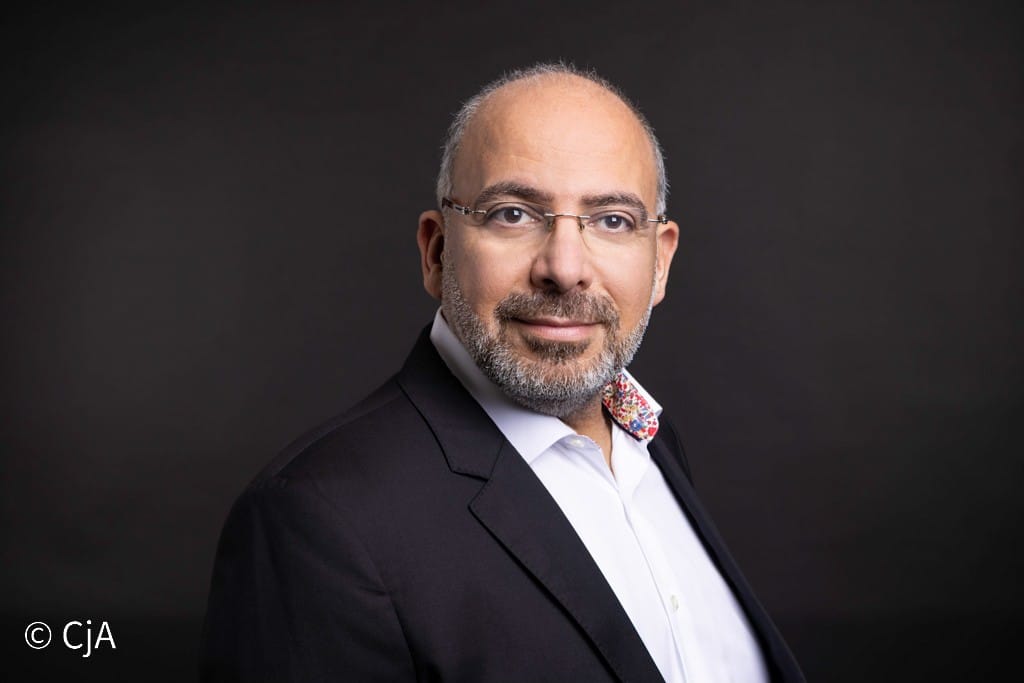
A conversation with Charbel Aoun, Smart Spaces and Local Government Lead, EMEA at NVIDIA, on digital twins, sovereign AI and the next decade of Middle Eastern cities.
The Next Decade of AI in Middle Eastern Cities
AI is becoming the “central nervous system” of cities, shifting them from reactive to proactive environments. Cities are moving into spaces that don’t just collect data but actually reason and adapt in real time.
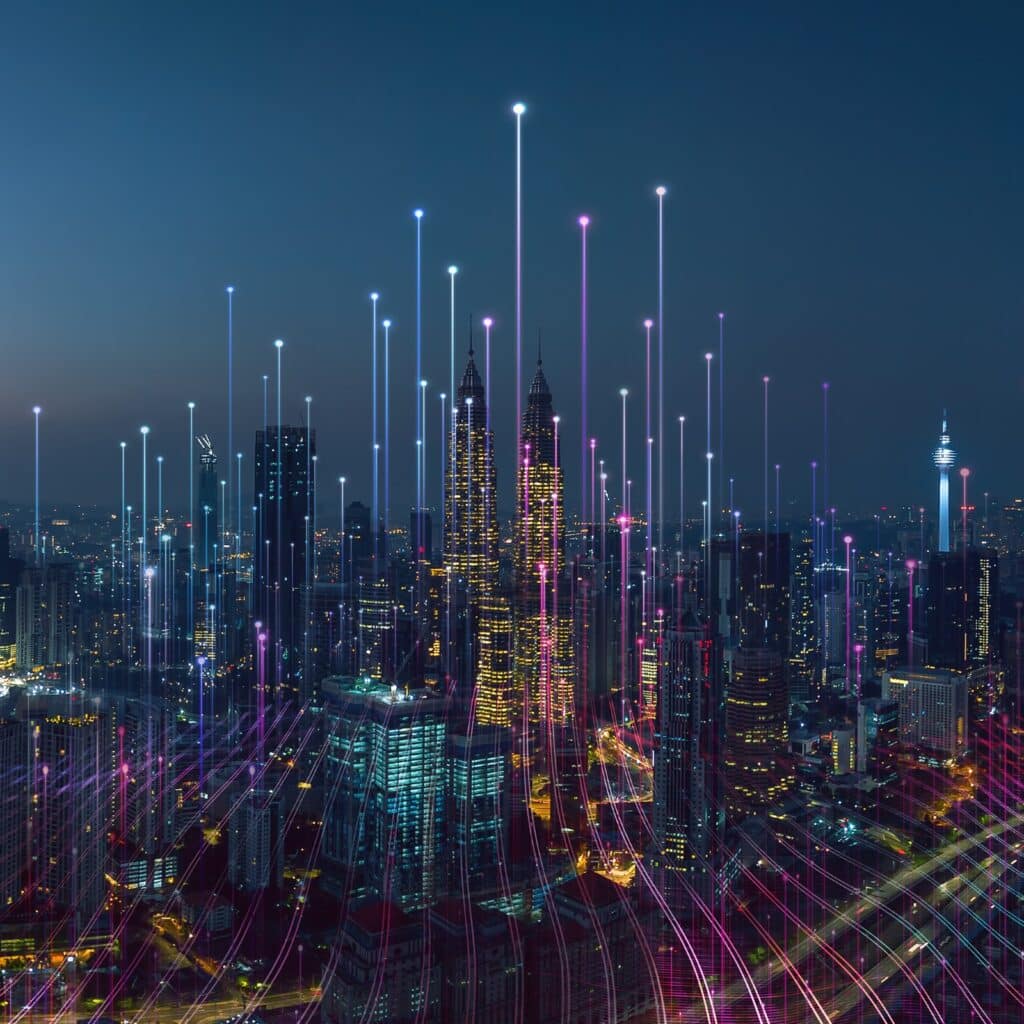
In urban planning, the era of Physical AI is emerging. Using NVIDIA Omniverse and the Cosmos world foundation models, leaders can build “SimReady” digital twins. These are not static 3D maps; they are physically accurate simulations where planners can test decades of climate impact or traffic growth in days. For regions such as the Middle East, which face extreme heat and rapid population growth, the ability to simulate a district’s performance before breaking ground is a game-changer.
AI is also crucial in managing the transition to diversified, renewable-heavy energy grids. It is being deployed at the edge to balance solar, EV charging, and district cooling street by street. In citizen services, cities are moving toward systems where AI agents don’t just answer questions but actually complete tasks, from processing permits to managing emergency responses, reducing administrative lag from weeks to minutes.
Balancing Commercial Opportunity and Societal Impact in Smart City Initiatives
Commercial success and societal impact are structurally linked through the concept of Sovereign AI. For a city to be truly “smart,” it must own its intelligence. NVIDIA facilitates this by helping nations build AI Factories, which are high-performance data centers that turn raw data into a national asset.
The company’s approach is simple. It helps cities build AI capability, not AI dependency. By providing open platforms like NVIDIA Metropolis and NVIDIA Inference Microservices (NIMs), the company empowers the local ecosystem to solve their own community’s challenges. Whether it is reducing road fatalities or optimising water grids, the goal is a triple win for urban resilience: cities are becoming sustainable for operators, operationally efficient for governments, and most importantly, life-enhancing for the people who live there.
Smart City Readiness in the Middle East
The UAE, Saudi Arabia, and Qatar have moved past the “pilot project” phase and are now building smart cities at an industrial scale. They recognise that AI is the new electricity – it is the foundational infrastructure for a modern, post-oil economy.
The primary barrier isn’t a lack of technology but fragmentation. Many cities still have “islands of data” where the transport department doesn’t speak to the energy grid. To overcome this, there is a need to move away from vendor lock-in and instead invest in a unified, sovereign AI fabric. The nations that treat AI as a national priority on par with energy or security give the private sector the confidence to invest for the long term.
Who Controls the City’s Data?
Urban data is ultimately a public asset. Charbel Aoun’s philosophy has always been: Made in the city, for the city, by the city. Governments are advised to act as stewards of an “urban data commons” – setting the rules and ensuring privacy while allowing an ecosystem of partners to innovate on top of anonymised data.
NVIDIA provides the infrastructure, the AI Factory, but the city must own the “fuel” (the data) and the “output” (the intelligence). This prevents the black box problem where a city relies on an external vendor to understand its own operations. The real value isn’t in selling raw data but in creating high-value services like predictive maintenance for utilities or real-time logistics optimisation for ports that can help save millions in operational costs.
Making the Case for Sustainable Smart Cities
In the age of accelerated computing, efficiency is the ROI. NVIDIA anchors its discussions in hard evidence. For example, its work with partners like Akila and SNCF Gares et Connexions has proven that AI-driven digital twins can reduce energy consumption in large facilities by 20% and unplanned downtime by 50%.
NVIDIA encourages an ROI strategy by phases. Starting with high-impact Physical AI use cases like smart building management or AI-optimised traffic flow, cities generate immediate savings. These savings then create a flywheel effect, providing the capital needed to fund longer-term decarbonisation goals. In 2026, a sustainable city is simply a city that is too efficient to waste money or energy.
Smart Cities at the Edge and in the Cloud
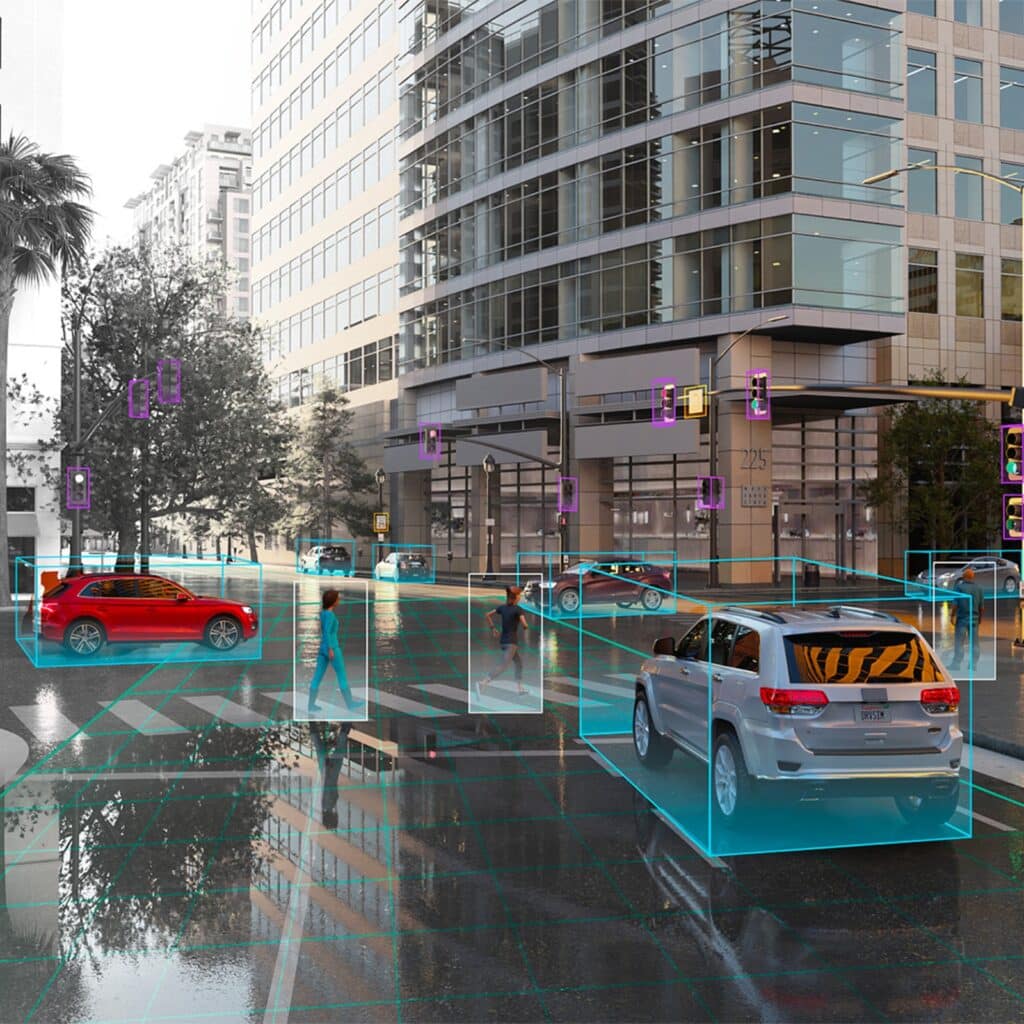
The future isn’t “Edge or Cloud” – it’s a seamless computing continuum. Critical safety AI, like autonomous shuttles or emergency response systems, must happen at the Edge with technologies such as NVIDIA Jetson to ensure zero latency. Cities cannot wait for a cloud connection when a vehicle needs to make a split-second safety decision.
At the same time, the Cloud and the local AI Factory handle the heavy lifting: training massive models and hosting the city-wide digital twin. NVIDIA bridges this through a unified architecture. Reasoning-based AI agents can be refined in the cloud, tested in an NVIDIA Omniverse simulation, and deployed to 10,000 edge devices instantly. It becomes one distributed “brain” working across the entire urban fabric.
Smart Cities in 2036
The term “Smart City” will probably be redefined as technology becomes invisible. Residents will simply live in a city that works. The experience will be defined by “flow.” Traffic lights will stay green because they detect an ambulance or a crowd of pedestrians; buildings will “breathe” and adjust their temperature based on occupancy; and interactions with the city will take the form of a conversation with a digital assistant that actually understands the context.
NVIDIA is providing the foundational Physical AI, the intelligence that understands the physical laws of the world, to make this possible. If NVIDIA does its job well, residents will not notice the GPUs or the sensors; they will only notice that they have more time, cleaner air, and a city that feels as though it was designed specifically for them.
As featured on the cover story of Business Today Middle East, March 2026.