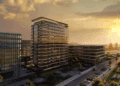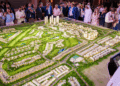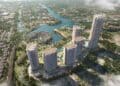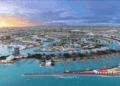
Sobha Realty’s simultaneous launch of two master-planned communities worth $24 billion collectively is not simply a developer bet on UAE residential demand — it is a statement about the company’s confidence in its own balance sheet and in the long-term trajectory of Gulf real estate.
Sobha Realty announced the launch of two major master-planned communities on 1 June 2026, bringing the developer’s total UAE master developments to 16. Sobha Sanctuary in Dubai carries a total development value of $13.6 billion (AED 50 billion), while Sobha City in Abu Dhabi is valued at $10.8 billion (AED 40 billion), for a combined pipeline of $24 billion (AED 90 billion).
The scale of the simultaneous launch is unusual even by UAE standards, where large-scale master-planned communities have become the dominant format for residential development. It positions Sobha as one of the highest-volume developers in the market by committed capital, alongside Emaar, Aldar and DAMAC.
Scale and Mix of the Two Communities
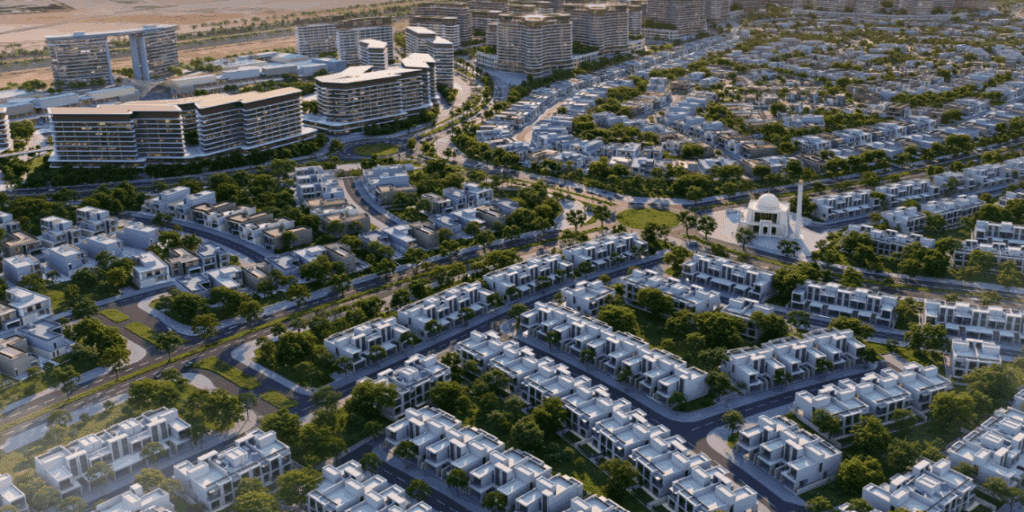
Sobha Sanctuary, located in Dubai, will span 37.5 million square feet and deliver approximately 20,000 residential units — 18,000 apartments and 2,000 villas. Sobha City in Abu Dhabi covers 38 million square feet with around 7,000 units comprising 4,000 apartments and 3,000 villas. Both developments allocate more than 50% of their land to green spaces and forest environments, incorporating over 50,000 trees each. The developer describes the green-allocation commitment as a response to buyer demand for nature-integrated living environments — a trend that has gathered pace since the post-pandemic shift in residential preferences.
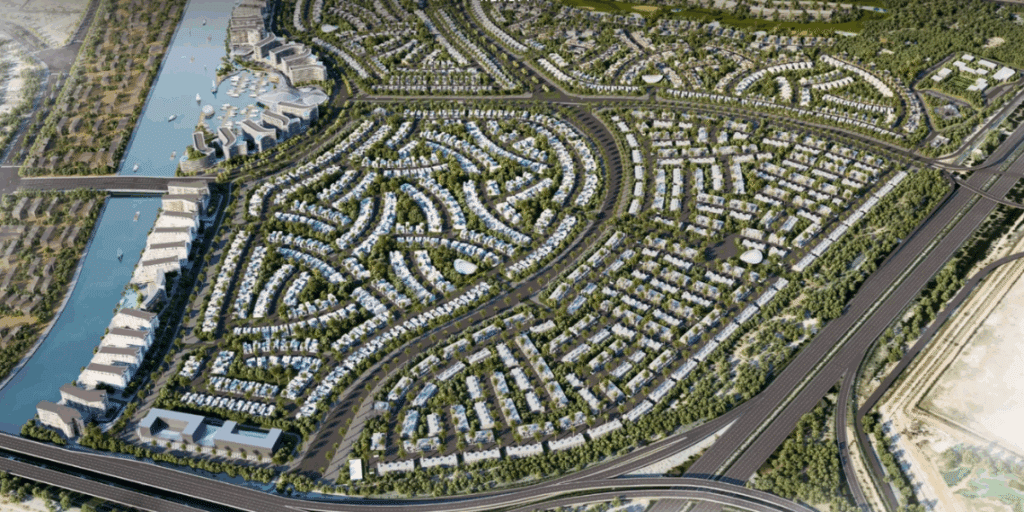
First phases of both communities are targeted for completion in Q4 2029, giving the developer a 3.5-year delivery window before the first handovers. Sobha reported that it currently holds nearly three years of revenue backlog and a land bank sufficient for 4.5 years of development activity, indicating that the financial foundations for this expansion are in place rather than contingent on future capital-raising.
Vertically Integrated Model as a Differentiator
Sobha’s business model — in which the company controls design, construction and project management rather than outsourcing to third-party contractors — is a stated competitive advantage during a period of supply-chain disruption. The model gives Sobha tighter control over cost and timeline, an advantage that has become increasingly valuable as construction material prices and contractor rates across the UAE have risen on the back of robust development activity.
The Abu Dhabi entry is strategically significant. Abu Dhabi’s residential market recorded a 119% surge in transaction volume in Q1 2026 and has historically attracted fewer large-scale private developers than Dubai, partly due to land ownership regulations that were eased in recent years. Sobha City represents a substantial commitment to Abu Dhabi’s premium residential supply.
What this Means for GCC Investors
Sobha’s $24 billion commitment is a high-conviction signal from a developer with a strong delivery record. It also represents a significant addition to the UAE off-plan supply pipeline over the 2026-2030 period, which bears on the price outlook for mid-to-upper residential segments in both Dubai and Abu Dhabi. Buyers and institutional investors evaluating exposure to UAE residential real estate should factor in the additional supply trajectory from projects of this scale when modelling price appreciation assumptions. The first-phase delivery in Q4 2029 will be a critical test of the market’s absorption capacity.