
Mick Satsangi, Chief Executive Officer of Dulsco Environment, on legacy, leadership, and why true sustainability is delivered at 4am
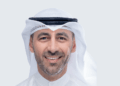
Mick Satsangi has seen what it takes to build environmental systems from the ground up in some of the world’s most demanding markets. From Australia to New Zealand, Saudi Arabia and now the UAE, he has spent decades doing the kind of work that rarely makes headlines but shapes everything — designing the infrastructure that decides what happens to the things we throw away. Now, as the newly appointed CEO of Dulsco Environment, he is channelling all of that experience into one of the UAE’s most enduring business institutions, and into one of the region’s most urgent challenges.
A Global Perspective on a Regional Opportunity
Having led operations across multiple continents before arriving in the UAE, Mick brings a genuinely rare comparative lens to the region’s approach to waste management and the circular economy.
“In my experience leading operations, I’ve seen that regulatory maturity in markets like Australia took decades to build — frameworks developed through sustained policy investment, community behaviour change, and significant infrastructure spending,” he reflects. “The UAE, a nation not yet 60 years old, has compressed what took others generations into a single decade. That is genuinely remarkable, and it speaks to the agility and ambition that defines this country.”
For Mick, that ambition is underpinned by serious policy architecture. The UAE Circular Economy Policy and the UAE Net Zero 2050 Strategy are not aspirational documents gathering dust on a shelf. They are working blueprints actively reshaping how businesses and communities relate to waste.
But he is equally clear-eyed about where the work remains. “The next frontier is source segregation at scale, building a stronger domestic market for recycled commodities, and deepening awareness and participation from both the corporate sector and our community,” he says. “The opportunity is not to simply catch up with mature markets. It is to leapfrog them by building a truly integrated circular ecoverse where everyone is genuinely aligned, and the result is a better future for our children.”

Building on Ninety-One Years of Trust
Joining Dulsco Environment at what the company itself describes as a pivotal moment in its growth journey, Mick is focused less on reinvention and more on elevation. “Dulsco Group has a 91-year legacy in the UAE, and that matters because trust, resilience, and strong client relationships are not built overnight,” he says. “My role is to build on that foundation in a way that is relevant to where the market and country are going.”
His immediate priorities are clear and deliberate. Strengthen operational discipline, invest in the right innovation and recovery capabilities, and deepen Dulsco Environment’s role as a trusted partner to clients who are under growing pressure to deliver measurable ESG performance. “The next phase of growth in this sector is not just about doing more work,” he adds. “It is about doing more meaningful work with better systems, stronger partnerships, and clearer outcomes. It is the journey from Good to Best.”
Honouring a 91-year Emirati heritage while driving transformation is a balance Mick takes seriously. “You don’t survive 91 years in business by standing still,” he says. “We honour Dulsco Group’s incredible Emirati heritage not by holding onto old ways of working, but by taking that deep foundation of trust and using it to drive the advanced environmental innovations the UAE needs today.”
“Sustainability isn’t delivered in a boardroom. It’s delivered at 4am during toolbox talks before our drivers hit the roads.”
When Ambition Meets Reality
Drawing on his experience designing environmental infrastructure for a giga-project from scratch, Mick is refreshingly candid about the tensions that come with building at scale. “The biggest lesson you learn is how to manage ambition with reality,” he says. “Circularity must be baked into the design from day one, but innovation only works if it can be commercially scaled. There is always a temptation to chase the shiniest green technologies, but if an environmental system is not affordable for the market to actually operate, it ultimately fails. True sustainability has to make economic sense.”
That philosophy is directly shaping how Dulsco Environment approaches its client relationships today. “We are focused on designing resource recovery systems that do not just look impressive on a blueprint, but are genuinely scalable, affordable, and deliver real ESG outcomes on the ground,” he explains.
Bridging the ESG Gap
On the question of whether businesses across the GCC are genuinely transforming their environmental practices or simply paying lip service to sustainability, Mick is honest. “There is still a gap regionally,” he acknowledges, “but from what I see on the ground, that gap rarely comes from a lack of intent. It comes from the reality that execution is hard or misunderstood and people seek genuine assistance.”
The conversation is changing rapidly though. “It used to be that clients thought of us just as a waste transporter. Today, they are bringing us to the table early to figure out how to recover resources and build circularity into their business. They know the old way of doing things will not cut it anymore.”
That shift is precisely where Dulsco Environment’s dedicated ESG team steps in, sitting down with clients, examining their commercial realities, and building practical, affordable roadmaps that move sustainability out of strategy documents and into core operations.

The Landfill Challenge
Waste diversion from landfill remains one of the region’s most pressing environmental challenges, and Mick does not shy away from the scale of what needs to be done. “World-class diversion is not just about stopping waste from going into a hole in the ground. It is about creating a genuine commercial market for what you recover,” he says.
Leading markets achieve diversion rates of over 80 to 90 per cent, supported by well-established infrastructure and strong policy frameworks. The UAE’s announcement of landfill closures by 2027 is, in Mick’s view, a bold and meaningful commitment. “It shows that the UAE is ready to change the way waste is disposed, collected, and repurposed,” he says. “And within that challenge lies the opportunity to convert discarded materials into resources that can be recovered, reused, and reintroduced back into the economy.”
People as the Engine of Change
Perhaps the most striking thing about Mick Satsangi is his conviction that the circular economy is ultimately a people story, not a technology story. “Sustainability is not delivered in a boardroom,” he says. “It is delivered at 4am during toolbox talks before our drivers hit the roads, out in the depots listening to our people, and on the recovery lines worked by our frontline teams. You can write the best circular economy strategy in the world, but if the people executing it do not feel safe, supported, and empowered, it falls apart.”
Two decades of leading complex, multicultural operations have taught him that safety and welfare are not just moral imperatives. They are the foundation of operational excellence. “When people know you have their back, they take ownership of their environment,” he says. “When a driver or a facility operator knows how their daily decisions directly impact the future of our children, it changes the game. They realise they are not just driving a truck. They are a voice that will travel as a legacy for change, actively improving our community.”
It is a philosophy as grounded as it is genuinely moving. And for a company with 91 years of history and an entire nation’s sustainability future to help shape, it feels like exactly the right one.