This feature was first published in the June 2026 issue of Business Today Middle East.
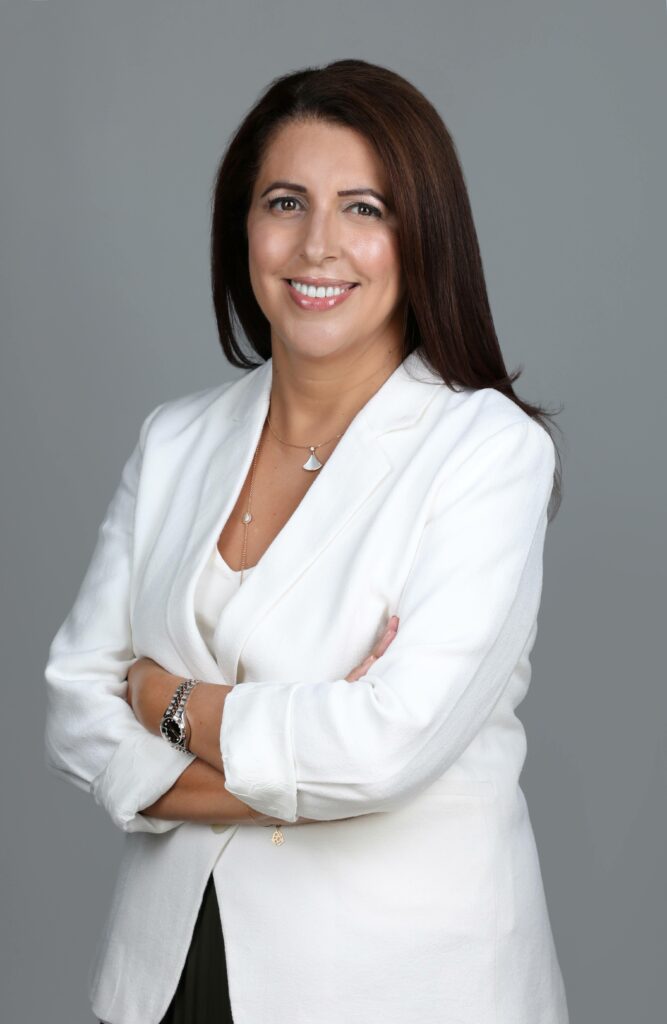
Amel Chadli, President of Gulf Cluster, Schneider Electric, has led the company across three continents and broken barriers in a male-dominated industry. She tells Business Today Middle East why the Gulf’s greatest advantage is its ability to move fast.
You’ve led Schneider Electric across Europe, Africa, and now the Gulf. What has that journey taught you about leading in diverse markets?
Leading across Europe, Africa, and now the Gulf has taught me that there is no universal leadership playbook – context matters deeply. Each market brings different realities, whether that’s regulatory complexity in Europe, access and affordability challenges in parts of Africa, or the Gulf’s ambition to scale innovation at speed.
At Schneider Electric, I’ve seen firsthand that the most sustainable results come when global expertise is paired with strong local leadership. In Africa, for example, we focused on building local teams, partnerships, and capabilities alongside deploying technology – an approach that strengthened resilience and long-term impact. That same principle applies in the Gulf today: listen first, empower local talent, and design solutions that are relevant, scalable, and built to last.
As President of the Gulf Cluster, where do you see the most significant opportunities for energy transformation in the region right now?
The biggest opportunities for energy transformation in the Gulf right now sit at the intersection of electrification, digitalisation, and efficiency. As demand grows – from cities, industry, data centers, and cooling – the priority is no longer just adding capacity, but making the system smarter, cleaner, and more resilient.
We see particularly strong momentum in three areas: grid modernisation to integrate renewables at scale, digital energy management for buildings and industry, and decentralised solutions that improve efficiency closer to where energy is consumed. At Schneider Electric, we’re already working across the region to turn this into reality – for example, supporting utilities and large infrastructure projects with digital grid and energy management technologies that reduce losses, improve reliability, and cut emissions.
The Gulf has a unique advantage: clear national visions, strong investment capacity, and the ambition to move fast. If technology, policy, and execution continue to align, the region can move from being an energy producer to a global leader in energy efficiency and intelligent, low-carbon systems.
Schneider Electric sits at the intersection of energy and digitalisation. How are those two forces reshaping the industry?
Energy and digitalisation are no longer separate conversations – they are now inseparable. As energy systems become more decentralised, electrified, and complex, digital technologies are what make them visible, controllable, and efficient.
At Schneider Electric, we see this every day. Digital platforms, AI, and real-time data allow customers to optimise energy use, reduce emissions, and improve resilience across buildings, industries, grids, and data centers. As an energy technology leader, we bring these capabilities together – helping customers move from disconnected assets to intelligent, interoperable systems.
In the Gulf, this convergence is especially powerful. Rapid urban development, ambitious net-zero targets, and rising digital demand mean the region cannot afford inefficiencies. By embedding digital intelligence into energy infrastructure – from smart buildings to modernised grids – the Gulf region has an opportunity to consume energy more sustainably while setting a global benchmark for efficient, future-ready systems.
“Energy and digitalisation are no longer separate conversations — they are now inseparable.”
As one of the few women at the top of the energy sector in this region, what does it take to lead and what needs to change to bring more women through?
Leadership in the energy sector starts with credibility, curiosity, and resilience – delivering results in complex environments while staying true to who you are. But leadership today is also about creating pathways for others to follow, especially in sectors that are transforming as fast as energy.
At Schneider Electric, we’ve been very intentional about this. Initiatives such as our FEM in STEM programme are designed to attract, develop, and retain more women in technical and leadership roles, while our more recent AED100 million commitment launched to shape next-generation talent in the UAE reflects our belief that long-term change starts early – by expanding access to STEM skills and learning opportunities for young people everywhere.
In the Gulf, the energy transition is moving at a remarkable speed, driven by national visions and large-scale investment. To sustain that momentum, we need to broaden the leadership pipeline. That means visible role models, inclusive workplaces, and practical support for women and young people to enter and progress in engineering, digital, and energy careers. When women are part of shaping energy systems, the outcomes are more resilient, innovative, and fit for the future the region is building.
“When women are part of shaping energy systems, the outcomes are more resilient, innovative, and fit for the future the region is building.”
Geopolitical and economic pressures are reshaping global energy priorities. How is Schneider Electric navigating that landscape in the Gulf?
Geopolitical and economic pressures are reinforcing one clear priority in the Gulf: energy systems must be more resilient, efficient, and increasingly local. For Schneider Electric, navigating this landscape means helping customers reduce exposure to volatility by improving efficiency, digitising operations, and strengthening local capability.
In the Gulf, we are working closely with utilities, infrastructure developers, and industries to modernise grids, optimise energy use, and integrate digital intelligence across critical assets -improving reliability while lowering costs and emissions. At the same time, we continue to localise expertise and value chains to support long-term resilience.
The region’s advantage lies in its ability to align policy, capital, and technology at speed. By focusing on energy efficiency, digitalisation, and local partnerships, the Gulf is actively reshaping its energy future – instead of reactively responding to global pressures.
What did Schneider Electric showcase at Make it in the Emirates this year, and why is this platform important for the company?
At Make It In The Emirates 2026 earlier last month, Schneider Electric, together with its joint venture TAQANA Energy Solutions, a partnership between Schneider Electric and the Arab Development Establishment (ADE), showcased a portfolio focused on locally manufactured electrification solutions and digital innovation designed to strengthen the UAE’s industrial resilience. Schneider Electric and TAQANA highlighted locally manufactured electrical and energy-management solutions produced at TAQANA’s Abu Dhabi facility (ICAD).
These solutions are designed to support industrial facilities, critical infrastructure, utilities and energy-intensive sectors while advancing in-country value (ICV) and supply-chain security. A key focus was digital-twin innovation, demonstrating how AI-enabled, sensor-driven and software-defined systems can improve asset visibility and performance, optimise energy efficiency and reliability, and enable predictive maintenance across industrial sites. Practical applications for UAE industries scaling under Operation 300bn helped reinforce Schneider Electric’s leadership at the intersection of electrification and digitalization.
What is the single biggest thing Schneider Electric wants to achieve in the Gulf in the next five years?
Over the next five years, our biggest ambition in the Gulf is to help turn energy efficiency and digitalisation into the region’s strongest growth advantage. As demand rises across infrastructure, industry, transport, and data centers, the priority is not just to add energy, but to use it far more intelligently.
We are doing this by modernising grids, digitising energy use across buildings and industry, and localising advanced manufacturing and skills. Whether it’s deploying AI-enabled digital grid platforms, expanding ‘made-in-region’ production capacity, or supporting national net-zero and industrialisation agendas, our focus is clear: deliver resilient, efficient, and future-ready energy systems that support the Gulf’s long-term competitiveness.
We’ve entered a new phase of industrial expansion in the UAE and the wider Middle East, driven by a shift toward autonomous, AI-powered production that enables highly efficient industrial operations with minimal human intervention.