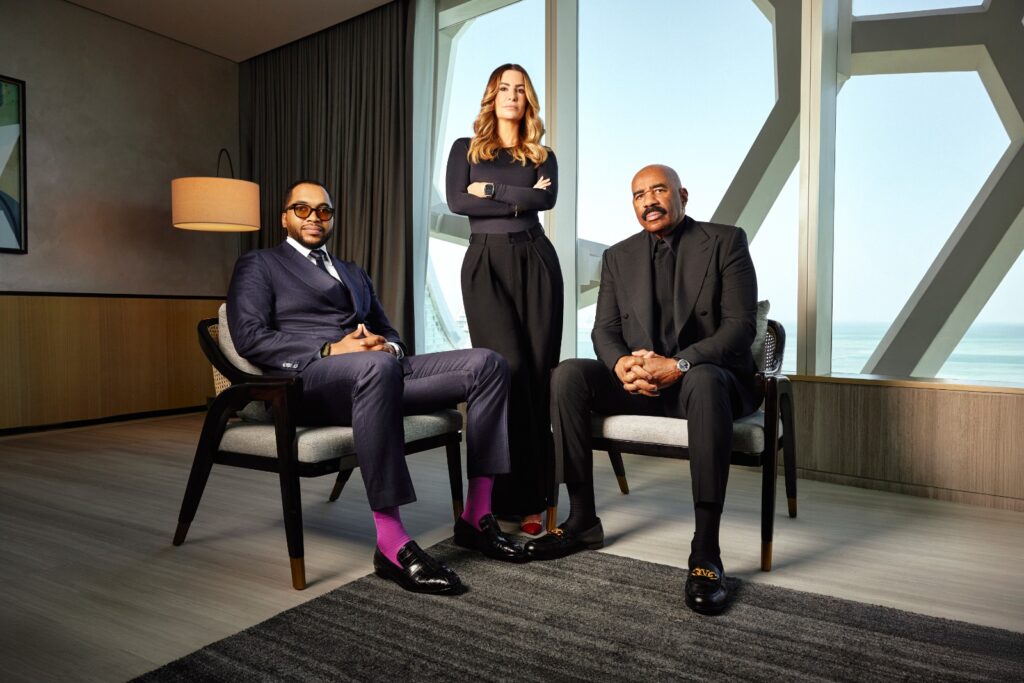
Claire Romano, CEO & Co-founder of Melt Media, shares how live events and cultural experiences in the Middle East are evolving from one-off moments into year-round platforms that drive business growth, digital engagement, and audience loyalty.
The Middle East has become a major hub for large-scale cultural and live experiences. How do you see the business and economic value of these platforms evolving over the next few years?
The Middle East has shifted from being an emerging events market to becoming a global benchmark for large-scale cultural and live experiences. These platforms are no longer viewed purely as entertainment, they are economic engines. They boost tourism, attract investment, strengthen brand equity, and support long-term industry growth.
Over the next few years, the real evolution will happen behind the scenes. Physical events and digital ecosystems will become fully integrated. An event will no longer be defined by a three-day spectacle. It will live year-round through content, community, data, and monetisation.
The real win is turning hype into loyalty, applause into sales, and attention into an asset you actually own. In markets like Saudi Arabia and the UAE, live experiences are becoming part of the economic infrastructure not just activation, but long-term strategy.
Many brands invest heavily in visibility around key moments or flagship events. In your experience, what separates a short-term campaign from something that becomes a long-term digital asset?
It comes down to intention and infrastructure.
A short-term campaign is about being seen. A long-term digital asset is about owning the relationship. If a brand invests in a major moment but fails to capture data, retarget audiences, drive measurable ticket sales, or build content systems that extend beyond the event, the value fades as soon as the lights go down.
For events specifically, it’s not just about creating buzz. It’s about converting that excitement into revenue and then into a loyal audience you can activate repeatedly.
The smartest brands think beyond impressions. They focus on community building, first-party data ownership, measurable performance, and digital systems that compound over time. When visibility is supported by strong CRM architecture, clear tracking, and structured content ecosystems, marketing stops being spent, it becomes an asset.
And while we work extensively across live experiences, we are not just an event marketing agency. We partner with brands across industries that want to strengthen their digital performance, increase sales, and build scalable audience ownership.
You’ve spent much of your career in performance marketing. How should companies think about balancing measurable short-term results with long-term brand building?

It’s not a trade-off, it’s a sequence.
Performance marketing delivers clarity: conversions, revenue, measurable ROI. Brand building creates the conditions that make performance more efficient over time.
If companies focus only on short-term performance, acquisition costs eventually rise. If they focus only on brands without measurement, growth becomes difficult to sustain.
The real advantage comes from integration. Brand builds emotional equity and demand. Performance captures and converts it. One creates desire; the other drives sustainability.
The businesses that scale understand that brand is not a soft investment. It is a growth multiplier.
With the launch of MELT Media, what gap in the market were you seeing, and why did now feel like the right time to introduce this new digital arm?
We repeatedly saw extraordinary physical productions, sold-out crowds, ambitious investment, cultural impact but limited digital infrastructure to sustain that momentum.
There was visibility, but not ownership. Energy, but not structure.
At the same time, many brands were operating within traditional agency models that struggled to match the pace of the region. Strategies were often disconnected from measurable growth and long-term digital architecture.
MELT Media was built to bridge that gap.
We combine performance discipline with cultural intelligence and scalable digital systems. Because today, visibility alone is not enough. Brands need measurable sales, owned audiences, and infrastructure designed for growth.
The region is no longer experimenting, it is scaling. And scaling requires structure. Our focus is simple: turning attention into assets.
Today, the digital layer behind an event or platform can be just as important as the physical experience itself. How should organisations approach building that digital infrastructure more strategically?
Digital should never be an afterthought. It should be embedded from the very beginning.
Whether it’s an event, a product launch, or a brand expansion, the digital journey must be designed alongside the physical experience. From the first interaction to ticket sale, from on-site engagement to post-event retention and future monetisation, every touchpoint should be intentional and measurable.
When digital infrastructure is layered in at the end, it becomes reactive. When it is architected from day one, it transforms the business model.
That transformation, from exposure to infrastructure, is where long-term value is created.
There’s increasing discussion around ownership of data, audiences and platforms. How critical is this for companies looking to create sustainable, compounding growth in the region?
It is absolutely critical.
Paid media costs fluctuate. Algorithms evolve. Platforms change. The only growth lever a company truly controls is its owned audience.
First-party data reduces acquisition costs, enables personalisation, and supports recurring revenue models. Without ownership, brands remain dependent. With ownership, growth compounds.
In a region expanding at this pace, digital infrastructure is the difference between short-term spikes and sustainable scale.
Having worked in both London and across the Middle East, what differences have you observed when it comes to scaling digital businesses in this region?

The Middle East moves fast with bold ambition and decisive investment. That creates enormous opportunity, but it also demands agility and clarity.
London operates within mature and highly competitive markets where growth is incremental. In contrast, many sectors in the Middle East are still expanding rapidly, creating space for innovation — provided infrastructure and talent scale accordingly.
The organisations that succeed here combine international standards with deep regional understanding.
Speed is an advantage but only when supported by structure.
As a CEO operating at the intersection of culture, technology and performance, what leadership mindset is required to navigate such a fast-moving and competitive landscape?
Clarity. Adaptability. And never compromising your values.
In fast-moving industries, leaders must make decisions quickly without losing direction. A strong long-term vision must be paired with tactical flexibility.
Living and working across multiple countries has shaped my adaptability. After ten years in the Middle East, I’ve learned how to operate between global standards and regional nuance and I’ve never felt more aligned with a market.
Operating at the intersection of culture and performance requires balancing bold creativity with measurable accountability. Culture drives relevance. Performance drives sustainability. You need both.
Leadership here also requires optimism. The region is building at scale, and where some see complexity, I see opportunity.
As a woman leader in the UAE, I feel genuinely supported. This is a region that champions ambition and that momentum is shaping a powerful new generation of leadership.