In 2026, the global economy has moved past the era of “profit at any cost.” A new generation of leaders is embracing Impact Entrepreneurship—a model where solving “Grand Challenges” like climate change, social inequality, and healthcare access is the primary engine of commercial growth. Unlike traditional corporate social responsibility (CSR), impact entrepreneurship embeds social and environmental solutions directly into the core product or service, ensuring that every dollar earned drives a measurable positive outcome.
1. The Core Philosophy: Profit Meets Purpose
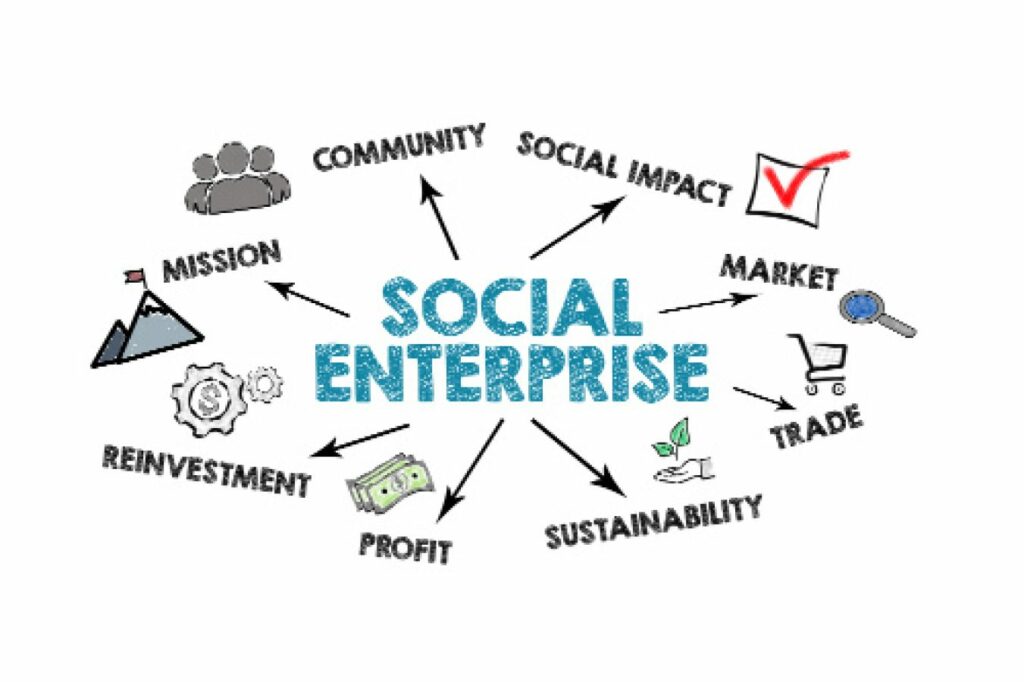
Impact entrepreneurship is defined by a “dual-mission” approach. These ventures do not treat social good as a side project; they treat it as their raison d’être.
- The Integration of Values: In 2026, successful startups are “values-led and measurable.” They apply economic logic to market failures, prioritizing the resolution of formidable challenges—such as resource inaccessibility—over simple wealth creation.
- Financial Sustainability: A key differentiator from traditional non-profits is the reliance on market-driven revenue. By being profitable, these enterprises can scale their impact globally without being tethered to the unpredictability of donations or grants.
- Measurable Outcomes: The “Impact” in impact entrepreneurship refers to data. Ventures now use SROI (Social Return on Investment) and real-time AI tracking to prove their efficacy to investors, regulators, and a more conscious consumer base.
2. 2026 Trends: The AI-Native Impact Venture
Technology, specifically Agentic AI, has become the ultimate force multiplier for impact-driven founders.
- Operational Resilience with AI: Small, lean teams are now able to compete with massive corporations by using autonomous AI agents to handle routine operations, allowing founders to focus 100% of their energy on mission-critical innovation.
- Hyper-Personalized Solutions: AI is being used to tailor social solutions—such as affordable medical diagnostics or localized educational tutoring—to the specific needs of underserved communities at a fraction of previous costs.
- The Circular Economy: Sustainability consultants and “Silver Tech” (elderly care) innovators are leveraging blockchain to create transparent supply chains, ensuring “Material Honesty” and ethical sourcing are verifiable and automated.
3. The “Impact Advantage” in 2026
Choosing the path of impact entrepreneurship provides distinct competitive advantages in today’s market:
- Talent Retention: Gen Z and Millennial workforces are increasingly prioritizing “meaningful work.” Companies with a clear social mission report higher employee engagement and lower turnover rates.
- Strategic Differentiation: In a saturated digital market, a genuine commitment to social value serves as a powerful brand differentiator, fostering deep customer loyalty that transcends price points.
- Regulatory Compliance: With the tightening of ESG (Environmental, Social, and Governance) mandates globally—particularly in the EU and GCC—impact-native businesses are already ahead of the compliance curve, making them “de-risked” assets for institutional investors.
4. The Cons: Navigating the Hard Truths
While the rewards are significant, impact entrepreneurship in 2026 carries unique burdens:
- The Measurement Burden: Translating abstract goals like “improving lives” into hard data is technically difficult and expensive. Founders often struggle to balance the cost of impact auditing with the need for lean operations.
- Mission Drift: As ventures scale and take on traditional venture capital, there is a constant risk that the pursuit of 10x returns will dilute the original social mission—a phenomenon known as “impact washing.”
- Funding Gaps: Despite the rise of impact investing, the “Missing Middle”—ventures that are too big for seed grants but too small for major institutional rounds—still faces significant capital hurdles.
- Complexity of “Grand Challenges”: Solving systemic issues like poverty or pollution involves navigating broken political systems and entrenched market failures that technology alone cannot fix.
5. Summary of the 2026 Impact Landscape
| Feature | Traditional Entrepreneurship | Impact Entrepreneurship |
| Primary Goal | Market Dominance / Wealth | Solving a “Grand Challenge” |
| Success Metric | ROI / EBITDA | SROI / Triple Bottom Line |
| Role of Tech | Efficiency / Cost Reduction | Scale of Human Benefit |
| Customer Bond | Transactional / Brand Affinity | Shared Values / Community |