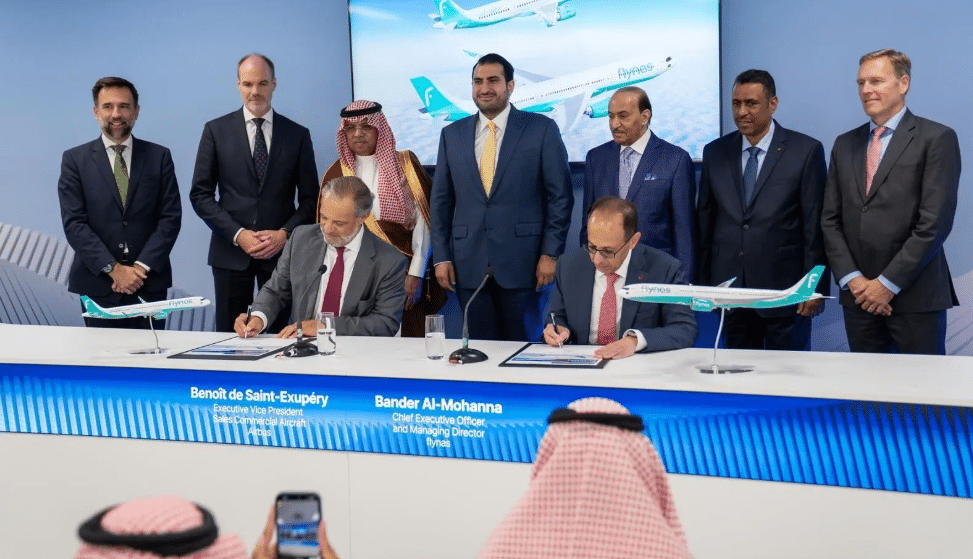
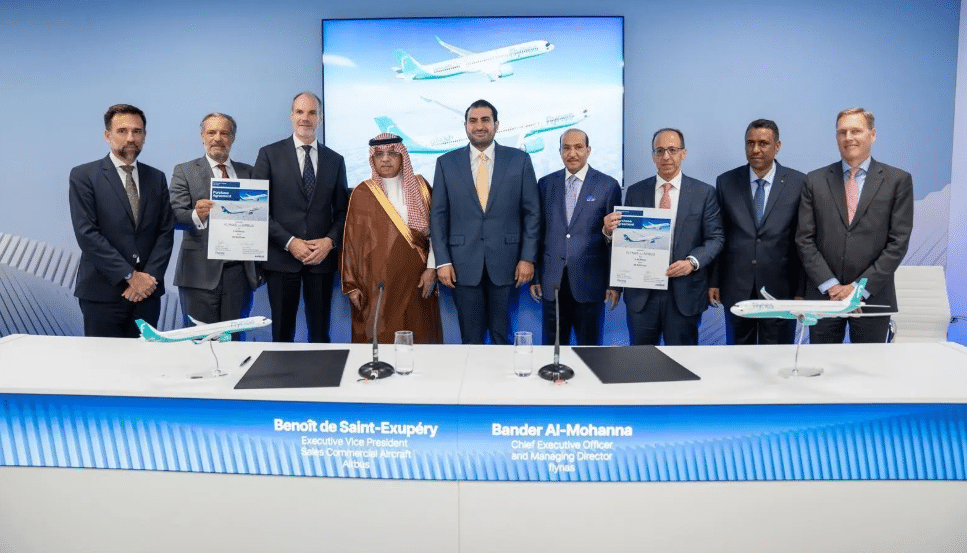
flynas has confirmed the purchase of 25 new Airbus aircraft, including five A330neo wide-body jets and 20 A321neo aircraft, under its existing agreements with Airbus. The latest orders bring the airline’s confirmed Airbus aircraft commitments to 235 out of a total orderbook of 280 aircraft, supporting its long-term expansion strategy and operational growth.
With the confirmation of these purchases, flynas’ total confirmed orders for the A330neo have increased to 20 aircraft, while its Airbus A320 Family orders have reached 215 aircraft.
The agreement was signed by flynas Chief Executive Officer and Managing Director Bander Almohanna, in the presence of Saudi Ambassador to the United Kingdom Prince Abdullah bin Khalid bin Sultan bin Abdulaziz, President of the General Authority of Civil Aviation Abdulaziz Al-Duailej, and flynas Chairman Ayed Aljeaid. Airbus was represented by Executive Vice President Sales of Commercial Aircraft Benoît de Saint-Exupéry.
Almohanna stated that the aircraft expansion plan will support the sustainable growth of flynas’ fleet over the coming years, enabling the airline to strengthen operations across its six bases in Saudi Arabia and enhance its expansion capabilities, including supporting the development of flynas Syria.
He added that the increased aircraft commitments will allow flynas to enter new markets, strengthen its role as a strategic aviation partner supporting Saudi Arabia’s ambitions as a global tourism and travel hub, and contribute to the objectives of the Pilgrim Experience Program by improving access to the Two Holy Mosques and increasing aviation capacity.
The CEO highlighted that expanding confirmed Airbus orders to 235 aircraft will further enhance flynas’ ability to support Saudi Arabia’s economic transformation, particularly amid major tourism developments and international events such as Expo 2030 and the FIFA World Cup 2034.
Currently, flynas operates a fleet of 67 Airbus aircraft, including two A330s, four A320ceos, and 61 A320neos. The airline continues to expand its domestic and international network in line with the Saudi Aviation Strategy and Vision 2030 goals, strengthening air connectivity and supporting the Kingdom’s ambition to become a leading global transportation and logistics hub.